
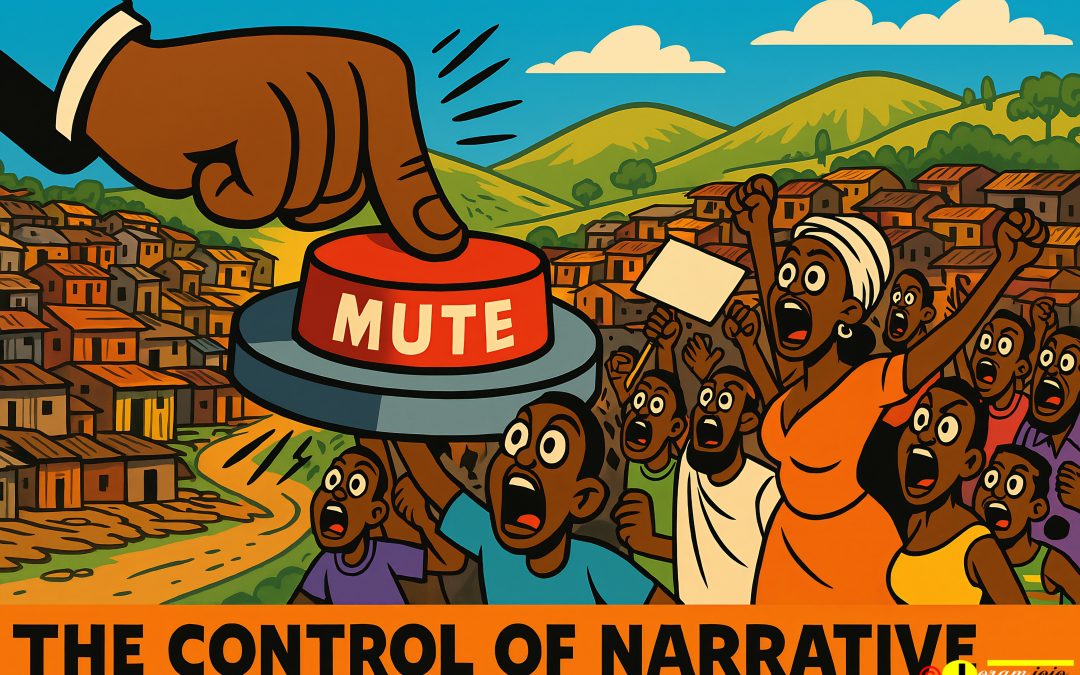
The State’s Blacklist: A Weapon to Silence Dissent and Enrich the Powerful
In the shadow of sleek government buildings in Kigali, a machine is humming. It does not produce goods or services, but something far more valuable to those in power: enemies. The recent publication of a ‘Domestic List’ of so-called terrorists and financiers, alongside a stern public notice from the Financial Intelligence Centre, is not merely bureaucratic procedure. It is a masterclass in modern statecraft, where the language of counter-terrorism becomes the favoured cudgel for crushing opposition, laundering international reputations, and tightening the grip of a paranoid elite.
This is the art of constructing an official reality, where any voice of dissent, any independent actor, or any distant critic can be re-labelled a ‘terrorist financier’. It is a process designed not to enhance security, but to eliminate it—the security of the people from the predations of their own rulers. Let us pull back the curtain on this elaborate performance.
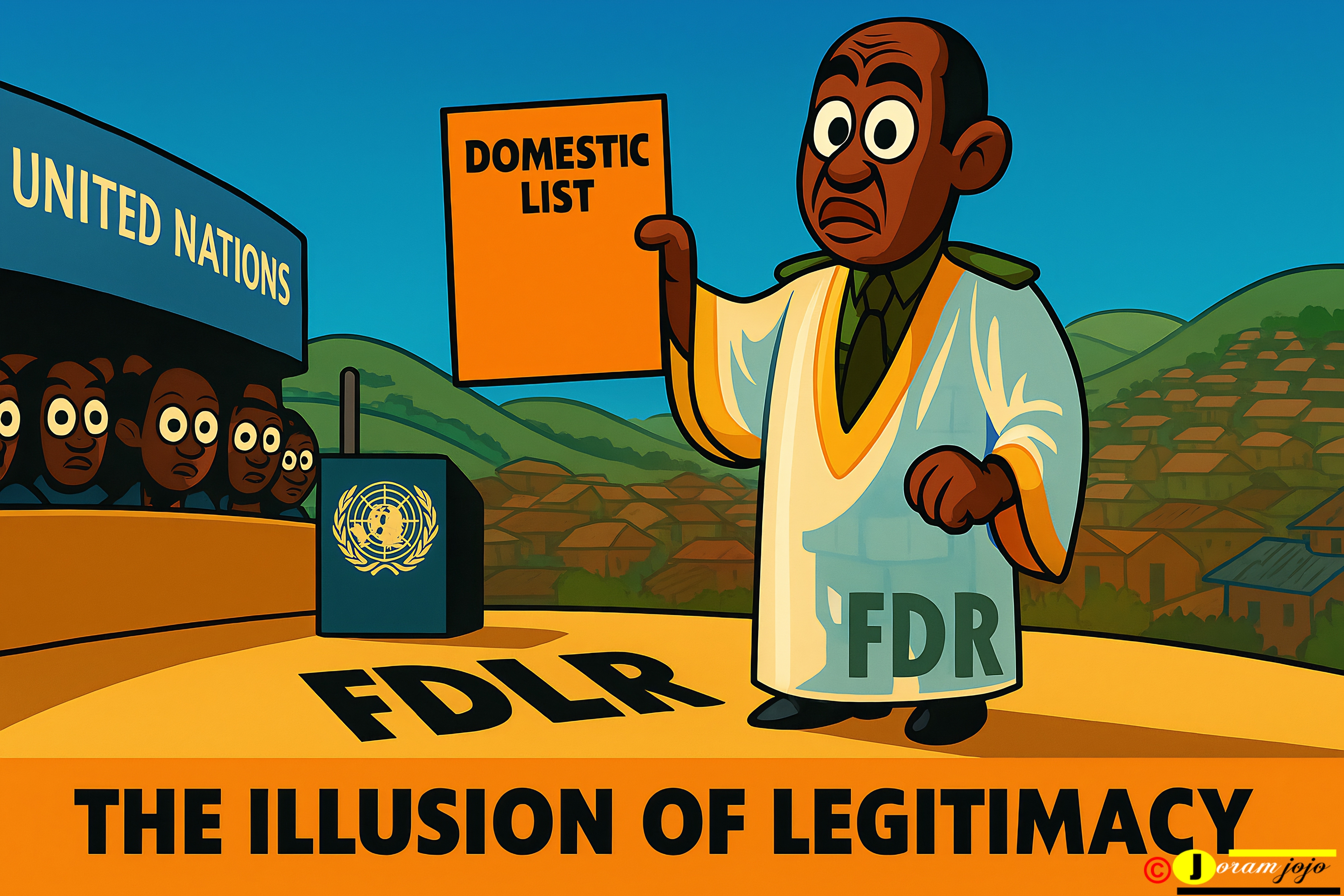 In October 2025, Rwanda’s National Counterterrorism Committee (NCTC) published its official Domestic List, naming 25 individuals designated as terrorists and terrorist financiers. This sanctions list, operating under Prime Minister’s Order 001/03, profiles figures from FDLR commanders like IYAMUREMYE Gaston in the DRC to political exiles such as KAYUMBA Nyamwasa in South Africa and MUNYEMANA Eric in Belgium. Presented with the formal language of UN compliance and legal procedure, the document directs the Financial Intelligence Centre (FIC) to enact targeted financial sanctions, freezing assets and restricting movements globally. However, a radical deconstruction reveals a more sinister reality. This analysis argues that the list is a sophisticated weapon of political repression, deliberately blurring the lines between armed militants and peaceful dissidents to silence critics abroad, shield a corrupt elite from scrutiny, and justify the regime’s vast security apparatus. By examining the weaponisation of ‘terrorism’, the use of secret evidence, and the chilling effect on the Rwandan diaspora, we expose how a document framed as a tool for national security functions as a blueprint for consolidating power and controlling the narrative against all forms of opposition.
Here is the complete Domestic List of 25 individuals as published in the document:
DOMESTIC LIST OF TERRORISTS AND TERRORIST FINANCIERS
1. Lt Gen IYAMUREMYE Gaston
-
Aliases: Rumuri aka Victor BYIRINGIRO
-
Date of birth: 14/01/1949
-
Place of birth: Muko Sector, Musanze District
-
Current address: Makora, Buhaya, Walikale, DRC
-
Role: Current president of FDLR terror group
-
Listed on: 14/10/2025
2. Maj Gen. NTAWUNGUKA Pacifique
-
Aliases: Omega
-
Date of birth: 1964
-
Place of birth: Gaseke, Ngororero
-
Current address: MAKORA, Buhaya, Walikale, DRC
-
Role: Commander of FDLR-Forces Combattantes Abacunguzi (FOCA)
-
Listed on: 14/10/2025
3. Col SEBAHINZI Sylvestre
-
Aliases: ZINGA ZINGA ZZ
-
Date of birth: 08/09/1961
-
Place of birth: Karago Sector, Nyabihu district
-
Current address: Lusaka-Zambia
-
Occupation: Businessman
-
Role: FDLR member and financial mobiliser
-
Listed on: 14/10/2025
4. Maj MUNYARUGENDO Alphonse
-
Aliases: Monaco Dollar
-
Date of birth: 1966
-
Place of birth: Ngororero District
-
Current address: Maputo-Mozambique
-
Role: FDLR coordinator in SADC region
-
Listed on: 14/10/2025
5. NTIRIKINA Faustin
-
Aliases: ZIGABE Pacifique
-
Date of birth: 1957
-
Place of birth: Hindiro Sector, Ngororero District
-
Current address: Mulhouse, Alsace, France
-
Nationality: French (acquired)
-
Role: Recruitment for RUD-Urunana and FLN
-
Listed on: 14/10/2025
6. Maj Gen HAKIZIMANA Antoine
-
Aliases: Jeva
-
Date of birth: 1971
-
Place of birth: Kanjongo Sector, Nyamasheke District
-
Current address: Bujumbura, Burundi
-
Role: CNRD-FLN military chief
-
Listed on: 14/10/2025
7. MUNYEMANA Eric
-
Date of birth: 2/4/1972
-
Place of birth: Karongi District
-
Current address: Aalst Commune, Flanders Region, Belgium
-
Nationality: Belgian (acquired)
-
Occupation: Mechanic
-
Telephone: +32466246792
-
Role: FLN Vice President and coordinator
-
Listed on: 14/10/2025
8. Dr BIRUKA Innocent
-
Aliases: MITALI
-
Date of birth: 1964
-
Place of birth: Huye
-
Current address: Mulhouse, Alsace, France
-
Nationality: French (acquired)
-
Role: CNRD-FLN secretary general
-
Listed on: 14/10/2025
9. KAYUMBA Nyamwasa Faustin
-
Date of birth: 1958
-
Place of birth: Rukungiri District Uganda
-
Passport: PD000294 (Rwanda)
-
Current address: Centurion Residential Estate, Pretoria, South Africa
-
National ID: 1 1958 8 0062103 0 38
-
Role: Founding member of RNC terror group
-
Listed on: 14/10/2025
10. Dr HAKIZIMANA Emmanuel
-
Date of birth: 4/1/1963
-
Place of birth: Nyanza Sector, Gisagara District
-
Current address: Montreal, Canada
-
Website: www.rwandanationalcongress.org
-
Telephone: +15147774809
-
Role: Co-founder of RNC terror group
-
Listed on: 14/10/2025
11. NYARWAYA ABDULKARIM Ali
-
Aliases: Dick Nyarwaya
-
Date of birth: 1968
-
Place of birth: Jinja-Uganda
-
Current address: Stanford, South London, UK
-
Nationality: British (acquired)
-
Role: Membership to P5 terror organization
-
Listed on: 14/10/2025
12. Maj HIGIRO Robert
-
Aliases: Gasisi
-
Date of birth: 24/10/1970
-
Place of birth: Kabarore, Uganda
-
Current address: Nairobi, Kenya
-
Role: Membership to P5 terror group
-
Listed on: 14/10/2025
13. NTMALI Frank
-
Date of birth: 12/12/1977
-
Place of birth: Kampala, Uganda
-
Passport: PC014343 & PC088065 (Rwanda, expired)
-
Current address: Johannesburg, South Africa
-
Role: RNC representative in Southern Africa
-
Listed on: 14/10/2025
14. RUSAGARA Ignace
-
Date of birth: 25/08/1986
-
Place of birth: Mubende, Uganda
-
Current address: Maine, USA
-
Role: Spokesperson for RNC
-
Listed on: 14/10/2025
15. TURAYISHIMIYE Jean Paul
-
Date of birth: 6/8/1972
-
Place of birth: Rutshuru, DRC
-
Current address: Washington, USA
-
Nationality: US Permanent Residence
-
Occupation: Court Interpreter
-
Telephone: +15083358771
-
Platform: East African Daily (YouTube)
-
Role: Founder member of RNC
-
Listed on: 14/10/2025
16. MUSABYIMANA Gaspard
-
Date of birth: 12/05/1955
-
Place of birth: Rusarabuye Sector, Burera District
-
Current address: Ninove, Brussels, Belgium
-
Occupation: Businessman
-
Platforms: musabyimana.net, Radio Inkingi
-
Role: Advocate for terror groups (P5)
-
Listed on: 14/10/2025
17. KAYUMBA Placide
-
Date of birth: 1981
-
Place of birth: Ndora Sector, Gisagara District
-
Current address: Namur Commune, Belgium
-
Role: Links FDU with FDLR
-
Listed on: 14/10/2025
18. MUNYANEZA Augustin
-
Date of birth: 1963
-
Place of birth: Muhanga District
-
Current address: Brussels, Belgium
-
Occupation: Taxi-Driver
-
Role: Member of FDU-INKINGI
-
Listed on: 14/10/2025
19. NIYIBIZI Michel
-
Date of birth: 1956
-
Place of birth: Muhororo Sector, Ngororero District
-
Current address: Tournai Commune, Belgium
-
Nationality: French (acquired)
-
Occupation: Teacher
-
Telephone: +32496646995
-
Role: Coordinator of fundraising for FDLR-FOCA and P5
-
Listed on: 14/10/2025
20. MUSONERA Jonathan
-
Date of birth: 01/02/1964
-
Place of birth: Nyanza District
-
Passport: PC027356 (Rwanda, expired)
-
Current address: London, UK
-
Role: Mobilisation of funds for NEW-RNC
-
Listed on: 14/10/2025
21. RUDASINGWA Theogene
-
Aliases: Redcom
-
Date of birth: 2/2/1961
-
Place of birth: Sake Sector, Ngoma District
-
Current address: Washington, USA
-
Role: Original member of RNC
-
Listed on: 14/10/2025
22. Maj KANYAMIBWA Jacques
-
Date of birth: 13/1/1957
-
Place of birth: Gitesi Sector, Karongi District
-
Current address: Toulouse, France
-
Role: Membership to FDLR
-
Listed on: 14/10/2025
23. NAHIMANA Thomas
-
Date of birth: 26/1/1971
-
Place of birth: Nzahaha Sector, Rusizi District
-
Current address: Le Havre, France
-
Platform: Isi n’ijuru TV YouTube channel
-
Role: President of ISHEMA party
-
Listed on: 14/10/2025
24. UWIZERA Christine Coleman
-
Date of birth: 25/07/1972
-
Place of birth: Rushashi Sector, Gakenke District
-
Current address: Denver, Colorado, USA
-
Nationality: USA (acquired)
-
Occupation: Pastor
-
Platform: X-Account @SOS_Rwanda
-
Role: FLN supporter
-
Listed on: 14/10/2025
25. NDUWAYEZU Sylivestre
-
Aliases: JET LEE
-
Date of birth: 1972
-
Place of birth: Musanze District
-
Current address: Kampala, Uganda
-
Email: uprdabatabazi@gmail.com
-
Telephone: +250738272654
-
Role: Planning and coordination of terror attacks
-
Listed on: 14/10/2025
*This list was prepared and approved by the National Counterterrorism Committee in accordance with Prime Minister’s Order n° 001/03 of 22/01/2025.*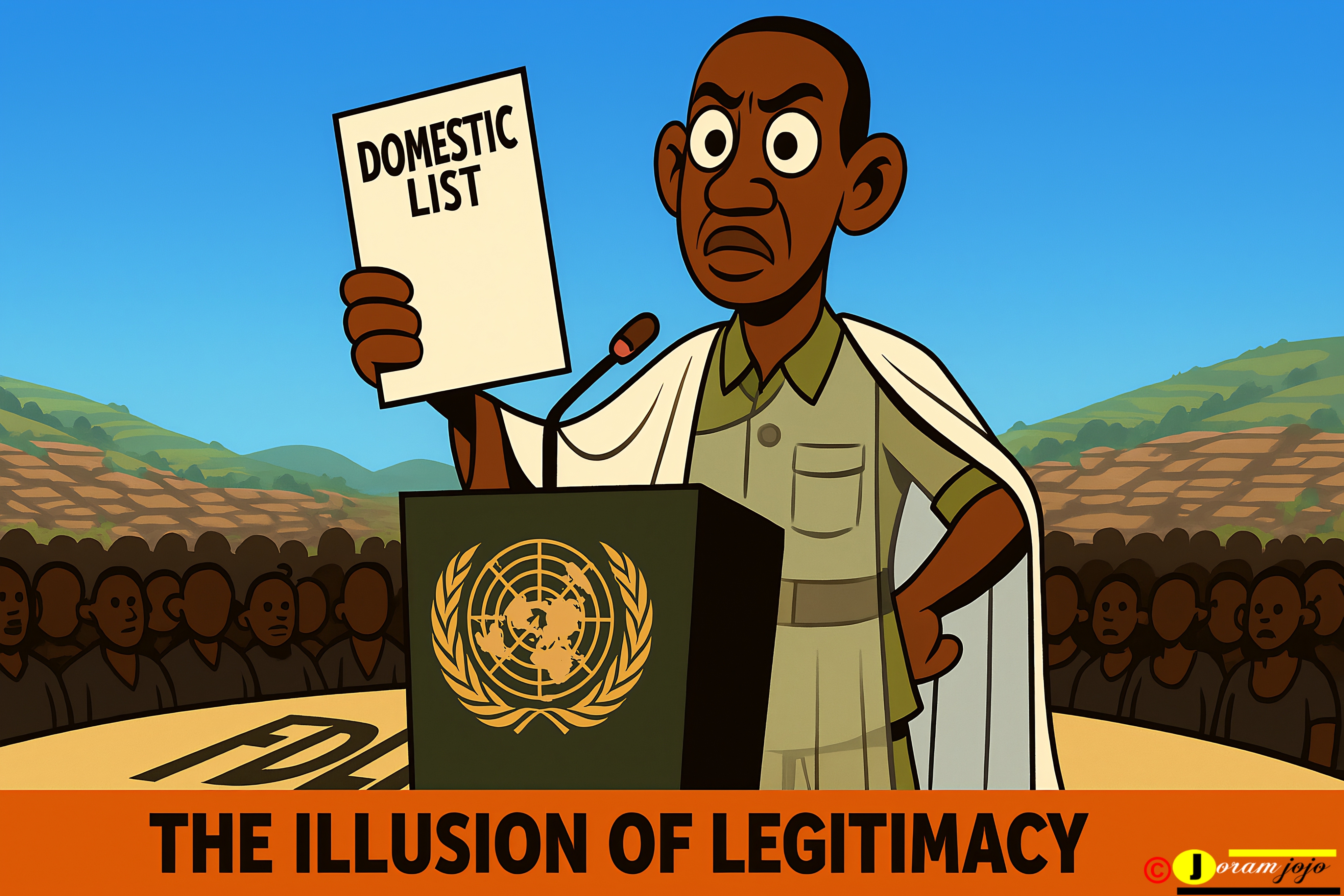
Twenty Pillars of the State’s Deception:
-
The Gilded Cage of Law: How Power Dresses Its Brutality in Fine Robes
They say that the law is a shield for the common person, but in the hands of an entrenched elite, it is more often a finely wrought cage. The recent ‘Domestic List’ published in Rwanda is a masterclass in this dark art. It is a document draped not in the plain cloth of justice, but in the ornate, gold-threaded robes of international legitimacy and legalistic jargon. This is not an earnest effort for security; it is a theatrical production, a grand illusion designed to make raw political power palatable to the outside world and fearsome to those within.
This performance relies on a simple, time-worn trick: borrowing the authority of respected institutions to lend credence to a partisan project. By meticulously referencing United Nations Sanctions Lists, Security Council Resolutions, and its own domestic regulations, the regime seeks to paint its political hit list with the impartial, sober colours of global governance. It is the political equivalent of a wolf dressing in the vestments of a shepherd—the form is comforting, but the intent remains predatory.
The choice of language is deliberate. Phrases like “UNSC Resolution 1533” or “targeted financial sanctions” are not just descriptive; they are incantations. They are spoken to diplomats in New York and Geneva, to bankers in London and Brussels, to signal that this is a serious state engaging in the serious business of counter-terrorism. This linguistic shield deflects criticism. To question the list is not to question a government’s political opponents, but to seemingly question the sacred, international fight against terrorism itself. It forces the critic into a corner where they must either accept the state’s framing or risk being labelled an apologist for violence.
 But peel back this gilded veneer, and the rotten core is exposed. The same document that name-checks the UN to condemn a handful of genuine armed militants also sweeps up political exiles, online journalists, and community organisers living thousands of miles away. What is the concrete, violent act of a dissident running a YouTube channel from Washington, or a pastor praying in Denver? Their ‘crime’ is not planting bombs, but challenging a narrative. Their ‘terrorism’ is their dissent. The international legal framework, designed with groups like Da’esh in mind, is cynically stretched to encompass anyone who dares to question the absolute authority of the ruling clique.
This creates a perverse inversion of justice. The regime, which has systematically consolidated all power, dismantled independent judiciary, and silenced critical media, now positions itself as the sole arbiter of ‘legality’. It writes the rules, it acts as the prosecutor, it serves as the judge, and it publishes the verdict—all while using the language of the United Nations to suggest a fair process has been followed. It is a system designed to produce guilty verdicts, not to discover truth.
There is an old adage that speaks to this: “The law, in its majestic equality, forbids the rich and the poor alike to sleep under bridges, to beg in the streets, and to steal bread.” The profound truth here is that a law, however formally correct, is not just if its application crushes the vulnerable while protecting the powerful. The ‘majestic equality’ of Rwanda’s terrorism list forbids both the armed militant and the peaceful critic from challenging the state. It treats a call for political change as equivalent to a call for murder. In doing so, it does not elevate justice; it debases the very concept, turning it into a weapon for the palace to use against the populace.
Ultimately, this illusion of legitimacy is the most potent weapon in the arsenal of a parasitic political class. It allows them to present the brutal work of silencing opposition as the dignified work of statecraft. It launders their political vendettas through the respectable institutions of global power. For the ordinary Rwandan, tired of being told to choose between the terror of the bush and the terror of the state, it is a cruel deception. It tells them that their yearning for a voice, for accountability, for a share of the wealth their labour creates, is not a political aspiration, but a criminal one. The law, meant to be a foundation for a just society, is thus corrupted into the central pillar holding up an unjust one.
-
The Elastic Noose: How ‘Terrorism’ Became the All-Purpose Weapon to Strangle Dissent
There is a terrifying magic in the word ‘terrorist’. Once uttered by those in power, it has the power to strip a human being of their humanity, their rights, and their future. It is the ultimate political curse. In Rwanda, this curse has been meticulously refined into a weapon of mass silencing. The term is no longer a precise descriptor for a specific, violent act; it has been stretched into an elastic noose, designed to fit any neck that dares to rise above the parapet.
This elasticity is not an accident of poor drafting or a lack of definitional rigour. It is the entire point. A rigid, narrow definition of ‘terrorist’ would only catch the genuine armed combatant. But a vague, sprawling definition becomes a net that can drag in anyone the state views as a threat. It is a strategic ambiguity, a feature of the system, not a bug.Consider the targets ensnared by this elastic noose in the recent list:
-
The Armed Militant: The FDLR commander in the jungles of the DRC, a group with a documented history of violence.
-
The Political Opponent: The exiled founder of the Rwanda National Congress (RNC), a political body that exists primarily in the realm of ideas and organisation abroad.
-
The Businessman in Exile: The individual in Lusaka or Maputo accused of “mobilising financial support.” This could mean funding a militia, or it could mean funding a critical newspaper or an opposition radio station.
-
The Online Journalist: The person running a YouTube channel, their ‘weapon’ not a Kalashnikov but a camera and a microphone, their ‘violence’ the act of publishing an alternative narrative.
-
The Pastor: A religious figure in Colorado, whose ‘terrorism’ is apparently limited to the ‘incitement’ of her sermons and social media posts.
By bundling these wildly different figures into the same category, the regime performs a sinister alchemy. It transmutes the base metal of political dissent into the gold of ‘terrorist activity’. It deliberately blurs the line between taking up arms and holding a different opinion, between financing violence and financing a political campaign. For the ordinary person, the message is deliberately muddied: Is this pastor truly a danger, or does the state just dislike her prayers? The ambiguity itself breeds confusion and fear.
This weaponised term then activates a devastating chain reaction. It justifies the freezing of bank accounts, the denial of services, the international isolation, and the silencing of voices. It turns the global financial system and international diplomacy into an extension of the regime’s domestic security apparatus. A businessman labelled a ‘terrorist financier’ is not just slandered; he is economically strangled. A journalist branded as such is not just criticised; he is deplatformed and rendered untouchable.There is a powerful adage that captures the brutal utility of this tactic: “Give a dog a bad name and hang him.” The strategy is as old as power itself. First, you assign the damning label—the ‘bad name’ of ‘terrorist’, ‘genocidaire’, ‘divisionist’. Once that label is securely attached, any action taken against the target is retroactively justified. The hanging is not seen as an act of political vengeance, but as a logical, necessary consequence of the ‘bad name’. The label does the heavy lifting of legitimising the brutality.
For the people of Rwanda, this elastic definition of terrorism is a trap. It forces a false and impossible choice: either you stand with the state against all these vaguely defined ‘terrorists’, or you are, by implication, siding with the enemies of the nation. It prevents the emergence of a nuanced public discourse where one could, for instance, condemn the FDLR’s historic violence while also defending the right of a political exile to advocate for peaceful change.
Ultimately, this is not about security; it is about monopoly. It is the effort of a privileged elite to monopolise the political space, to monopolise the economy, and, most crucially, to monopolise the power to define reality itself. By controlling the meaning of the most feared word in the modern lexicon, they seek to ensure that no alternative centre of power, no competing vision for society, can ever arise. The elastic noose is not just for the necks it currently chokes; it is a warning to every other throat to remain silent.
-
-
The Contagion of Dissent: How ‘Guilt by Association’ Becomes a Tool of Social Control
In the shadow of the state’s immense power, no individual stands alone. We are all woven into a vast, intricate web of relationships—family, friendship, professional ties, and shared political hopes. It is within this fundamental human truth that the regime discovers one of its most potent weapons: the doctrine of ‘guilt by association’. This is the insidious logic that if you have ever shaken the hand of a dissident, shared a meal with a critic, or merely followed the online channel of an exiled journalist, you are now contaminated. Your identity is dissolved into the group; your individual conscience is irrelevant. You are guilty not for what you have done, but for whom you might know.
The Rwandan ‘Domestic List’ is a textbook of this cruel philosophy. Scrutinise the entries, and you will find a chilling pattern. Individuals are condemned, their lives and livelihoods shattered, based on phrases like “connected to,” “close associate of,” “directly deals with,” or “linked to.” These are not accusations of planting a bomb or orchestrating a massacre. They are accusations of relationship. A businessman in Zambia is listed not for procuring weapons, but for being “connected to the FDLR terror group and its financial flow system.” What does this mean? Did he donate to their cause, or did he merely engage in a legitimate trade with someone who, in the state’s eyes, is tainted? The ambiguity is the point.This strategy achieves several destructive aims for the powerful:
-
It Eradicates the Individual: The concept of personal responsibility—a cornerstone of any meaningful justice—is obliterated. You are no longer judged by your actions, but by the company you keep, or are even alleged to keep. This allows the state to bypass the tedious requirement of proving a specific crime. It need only prove a connection, however nebulous.
-
It Poisons the Social Well: This is perhaps the most pernicious effect. If contact with a listed person renders you equally guilty, then the rational act of self-preservation is to shun anyone who holds a critical view. It forces a brutal social quarantine around dissent. It teaches a lesson of profound isolation: that to be a critical thinker is to be a leper, and that friendship and solidarity are dangerous liabilities. This atomises society, breaking the bonds of trust and mutual aid that are the bedrock of any community capable of resisting oppression.
-
It Creates a Perpetual State of Fear: When the rules are this vague, everyone is potentially guilty. You can never be sure if a cousin you haven’t seen in years, a university classmate who now lives abroad, or a person you retweeted might one day be declared a ‘terrorist’. This uncertainty is a powerful disciplinary tool. It encourages a state of constant self-censorship and pre-emptive obedience.
There is an adage that speaks directly to this tyrannical logic: “When you want to beat a dog, you can always find a stick.” The ‘dog’ is any person who challenges the established order. The ‘stick’ is the accusation of association. If the state cannot find evidence of a concrete crime, it needs only to find a ‘connection’. A shared surname, a decade-old photograph, a financial transaction, a familial link—anything can be fashioned into the stick used for the beating. The purpose is not to prove guilt, but to inflict punishment.
For the ordinary Rwandan, this creates an impossible landscape. It criminalises the very fabric of community. It tells the shopkeeper that selling a loaf of bread to the wrong person could ruin him. It tells the family that their son abroad, who speaks too freely, is a contagion they must denounce to survive. This is not a policy aimed at security; it is a calculated assault on social solidarity. It seeks to replace a society built on mutual support with a terrified collection of individuals, each alone under the watchful eye of the state.Ultimately, the weaponisation of ‘guilt by association’ reveals the regime’s deepest fear: not the lone terrorist, but the organised community. It is not the individual bomb it fears, but the collective idea. It understands that power, when faced with a united people, trembles. And so, it works relentlessly to ensure that the people can never unite, by making every social connection a potential death sentence for the soul, if not the body. It is the politics of the poison dart, aimed at the heart of human fellowship itself.
-
-
The Unseen Hand: How ‘Secret Evidence’ Becomes the Ultimate Tool of Injustice
In any society that aspires to call itself just, the foundation of law is a simple, profound principle: the accused is entitled to face their accuser. This is the bedrock, the safeguard against the raw, unchecked power of the state being used to settle scores and silence voices. Yet, in Rwanda, this principle has been systematically dismantled and replaced by a sinister phantom: the ‘Intelligence Report’.
This phrase, stamped throughout the ‘Domestic List’, is the ultimate magic trick of authoritarian rule. It is an accusation without an accuser, a verdict without a trial, and a sentence without a crime that ever needs to be publicly named. When the state declares that its evidence is found in ‘Intelligence reports’, it is not invoking a higher form of truth; it is declaring itself exempt from the tiresome demands of justice itself.
The power of this mechanism is its absolute impenetrability. What constitutes this ‘intelligence’? A whispered rumour from a paid informant seeking favour? A fragment of a digital conversation taken wildly out of context? A simple fabrication designed to remove a business rival or a political critic? The public will never know. The accused will never know. There is no document to be cross-examined, no witness to be challenged, no fact to be verified. The ‘intelligence report’ is a black box: allegations go in, and life-destroying sanctions come out. The state, in a breathtaking act of arrogance, positions itself simultaneously as the secret accuser, the secret judge, and the secret jury.
This creates a system of power that is fundamentally lawless, even as it masquerades as the ultimate authority. It is the rule of men, not of law. The whims, paranoias, and political calculations of a small, unaccountable elite are laundered through the respectable-sounding machinery of ‘national security’. The result is a form of punishment that is perfectly tailored for oppression: it is impossible to refute a ghost.
There is a piercing adage that captures the essence of this tyrannical practice: “A secret whispered is a lie confirmed.” When power operates in the shadows, when its evidence cannot bear the light of public scrutiny, it confesses its own falsity. The very secrecy of the ‘intelligence’ is the admission that it would not survive a moment of honest, open examination. It is the weapon of those who know their case is built on sand, and so they build a fortress of silence around it.For the people of Rwanda, this is more than an attack on a few exiled dissidents; it is an attack on the very possibility of a fair society. If a person’s livelihood, their reputation, and their freedom can be obliterated by a secret they are not allowed to see, then no one is safe. It creates a world where the only ‘safe’ activity is absolute, unquestioning loyalty. It stifles not just political dissent, but any independent thought, any entrepreneurial spirit that might challenge connected cronies, any academic inquiry that might question the official narrative.
This is the architecture of a cage for the human spirit. It tells every citizen that their fate rests not on their actions, but on the invisible, unappealable judgements of their masters. It is the most profound corruption possible—the corruption of truth itself, replaced by the absolute, unchallengeable word of power. In the end, a state that rules by secret evidence confesses a terrible truth: it fears the light of justice far more than any terrorist lurking in the shadows.
-
The Manufactured Monster: How the Vague Spectre of ‘P5’ Serves the Powerful
In the theatre of state repression, every compelling narrative needs a villain. In Rwanda, the current production features a shadowy, all-purpose antagonist known only as ‘P5’. This term is incanted with grave seriousness in official documents and pronouncements, a spectral threat used to justify a relentless crackdown. Yet, upon closer inspection, this monstrous entity has no clear face, no single manifesto, and no unified structure. Its power lies not in its reality, but in its deliberate vagueness. It is a ghost conjured by the state to haunt the political imagination and to justify the silencing of any and all dissent.
The genius of this phantom ‘P5’ coalition is its elastic meaning. It is never clearly defined. Is it a political alliance? A military wing? A fundraising network? The authorities offer no clear answer, because its utility depends on this ambiguity. By refusing to pin it down, they can bundle a vast array of disparate individuals and groups into one easily condemned package. The exiled politician advocating for democratic reform, the businessman critical of economic policy, the journalist running an independent blog, the community organiser—all can be labelled as tentacles of the same monstrous ‘P5’. This deliberate conflation is a political masterstroke for those in power.This strategy serves several crucial functions for the defenders of the status quo:
-
The Simplification of Complexity: Real-world opposition is messy, nuanced, and multifaceted. It contains different ideologies, strategies, and grievances. By inventing a single, monolithic ‘P5’, the state reduces this complex landscape to a simple, childlike story of good versus evil. This makes it easier to sell to international audiences who lack the time or resources for in-depth analysis. A simple story is a persuasive story.
-
The Corruption of Legitimate Dissent: By lumping peaceful critics in with armed militants under the same ‘P5’ banner, the state poisons the entire well of opposition. It creates a false equivalence, where a call for electoral reform is presented as being morally equivalent to a call for violence. This makes it impossible for any critic to gain a hearing on the international stage without first being forced to denounce a phantom organisation they may have no connection to.
-
A Licence for Unlimited Repression: If the threat is a vast, shadowy network with limitless tentacles, then the state’s response must also be limitless. The spectre of ‘P5’ becomes a blank cheque for surveilling anyone, freezing any asset, and detaining any person. It creates a permanent state of emergency that normalises the suspension of rights and justifies the concentration of absolute power.
There is an adage that perfectly captures this cynical strategy: “To kill a dog, you first call it mad.” The ‘dog’ is the entire spectrum of dissent. The accusation of being ‘mad’—of being part of the virulent, irrational ‘P5’—is the necessary first step to justify the killing. You do not need to engage with the dog’s behaviour or its intentions; you simply assign it a terrifying label, and its destruction becomes a public safety necessity.
For the ordinary people of Rwanda, this phantom is a tool of profound disempowerment. It steals from them the right to a nuanced political reality. It tells them they cannot support a teacher’s demand for better pay without implicitly supporting a shadowy armed coalition. It destroys the possibility of solidarity, turning every potential alliance into a suspected cell of the great, unseen monster.Ultimately, the ‘P5’ is more than just a propaganda term; it is a bucket into which the state can throw all its political trash. It is the name given to every hope for change, every demand for accountability, and every dream of a more equal share of the nation’s wealth. By making ‘P5’ the enemy, the regime really makes its own people the enemy—or at least, the part of its people that dares to imagine a different future.
The spectre will persist for as long as it is useful, for as long as the sound of its name can make the powerful feel secure and the hopeful feel afraid. But a phantom, by its very nature, cannot withstand the full light of day. Its greatest weakness is the courage of those who refuse to believe in ghosts. -
-
The Long Arm of the Palace: How Exile is Made a Crime and Solidarity is Shattered
For generations, people have fled hardship, seeking refuge and a voice in distant lands. The diaspora has long been a place where memories are preserved and hopes for a different future are nurtured. Yet, the Rwandan state is now perfecting a cruel and modern form of control, one that extends its grasp across oceans and borders. By designating a significant number of exiles in Europe, North America, and Africa as ‘terrorists’, it sends a calculated message: there is no escape. Your dissent, even spoken in the relative safety of a foreign capital, is now an existential crime.
This is not merely an expansion of a domestic policy; it is a strategic offensive in the international arena. It represents the weaponization of global counter-terrorism infrastructure to serve a domestic agenda of absolute silence. The individual living in Belgium, the community organiser in South Africa, or the academic in Canada—all find themselves in the crosshairs not of a local court, but of a sophisticated state apparatus that seeks to render them stateless in every meaningful sense: politically voiceless, financially paralysed, and socially isolated.
This criminalisation of the diaspora serves a multi-layered purpose for the powerful:
-
The Financial Chokehold: By labelling exiles as ‘terrorist financiers’, the state activates a global network of financial surveillance. Banks, fearing regulatory penalties, will freeze accounts. Businesses will sever ties. The lifeblood of remittances, which supports families and builds small enterprises back home, is threatened. This is a direct assault on the economic autonomy of the diaspora, aiming to bankrupt dissent into silence.
-
The Political Quarantine: It isolates critical voices from the international community. When a government declares an individual a ‘terrorist’, it creates a diplomatic forcefield around them. Which foreign politician will risk meeting them? Which academic institution will host them? Which media outlet will platform them without a disclaimer? They are rendered untouchable, their ideas quarantined as if they were a contagion.
-
The Destruction of Social Bonds: This policy deliberately targets the fabric of the diaspora community itself. It instils a deep fear that any association with a listed person—a phone call, a social media follow, a donation to their cause—could lead to one’s own family back home facing reprisals or one’s own legal status abroad being jeopardised. It turns community from a source of strength into a network of potential informants and a web of suspicion.
There is a powerful adage that speaks to this deliberate strategy of isolation: “He who wishes to poison a nation does not need to pollute every well. He need only convince the people that their neighbour’s well is poisoned.” The state is the great poisoner of trust. It does not need to arrest every single exile. It need only convince the diaspora that their most outspoken members are toxic, that solidarity is dangerous, and that to engage with a critic is to drink from a poisoned well. This shatters collective action at its root.For those who remain in Rwanda, the message is equally brutal. It tells them that their son, their uncle, their childhood friend abroad, is now an enemy of the state. It forces families into an agonising choice: renounce their loved ones or risk being considered complicit. This is a form of psychological warfare that reaches directly into the living rooms of ordinary citizens, using familial love as a weapon of control.
Ultimately, this long-arm repression reveals a profound truth about the nature of the ruling power. A government secure in the support of its people would have no need to hunt its critics in foreign lands. Its relentless pursuit of exiles is an admission of profound weakness—a confession that its ideology cannot compete in a free marketplace of ideas. It confesses that its authority rests not on consent, but on fear, and that this fear must be manufactured and maintained, even if it means turning the world into a prison without walls for its own people. The exile’s crime is not terrorism; it is the simple, audacious act of remembering a different future and daring to speak its name aloud. -
-
The Silent Guillotine: How Global Finance Becomes the Regime’s Enforcer
In the modern world, to be without a bank account is to be a ghost. It is to be severed from the means to eat, to shelter, to work, and to connect. Understanding this, the Rwandan state has perfected a form of remote-control repression that operates not with the brutal clamour of a prison door, but with the silent, sterile click of a keyboard. By directing banks and businesses—the ‘reporting persons’—to freeze the assets of those it designates ‘terrorists’, it has transformed the global financial system into a seamless, privatised extension of its own police apparatus. This is the financial chokehold: a silent, bureaucratic guillotine that falls on the necks of dissidents thousands of miles away.
This mechanism is terrifying in its efficiency and its banality. There are no midnight knocks on the door, no public arrests. Instead, a person finds their card declined at a supermarket. Their mortgage payment fails. Their business account is suddenly frozen. Their family’s remittances are blocked. This is not the messy violence of the battlefield; it is the clinical, cost-effective violence of compliance departments and anti-money laundering protocols, all weaponised to serve a political agenda.
The state, through its ‘Domestic List’, does not need to send agents abroad to physically confront its enemies. It simply issues a decree and leverages the fear and obligation of international finance. A bank in London or Brussels, wary of massive fines for non-compliance with ‘counter-terrorism’ regulations, will invariably choose to freeze a single customer’s account rather than risk a confrontation with a state. The regime thus outsources its repression, making the cold, rational logic of global capitalism its chief enforcer.This financial chokehold achieves several devastating aims for the ruling elite:
-
The Neoliberal Prison: It creates a cage made of financial data, not iron bars. An exiled critic can be physically free to walk the streets of Paris or Ottawa, but if they cannot access their funds, economic paralysis imprisons them. They cannot pay rent, fund their advocacy, or even secure a simple loan. It is a punishment that perfectly mirrors the ideology of our time: the reduction of all human value to financial viability.
-
The Privilege of Impunity: While the accounts of dissidents are frozen, the financial flows that benefit the state’s own cronies and their families continue unimpeded. This creates a brutal two-tier system: one set of financial rules for the connected and powerful, and another, far more punitive set, for anyone who challenges them. It is the ultimate corruption: using the language of financial integrity to protect and enable the very plunder it claims to fight.
-
The Weaponisation of Dependence: For many families in Rwanda, remittances from the diaspora are a lifeline. By threatening exiles with the ‘terrorist financier’ label, the state attacks this lifeline. It tells the population that their economic survival is contingent on the political silence of their relatives abroad. This turns family love into a lever of control and makes every citizen complicit in the silencing of their own kin.
There is an adage that cuts to the heart of this injustice: “The same law that forbids the rich man from sleeping under a bridge, forbids the poor man from sleeping in a palace.” The financial sanctions regime is this adage brought to life with brutal precision. The same anti-terrorism regulations that are meant to stop the flow of money to bomb-makers are used to stop the flow of money to a critic buying a microphone. The system, presented as majestically impartial, is brutally biased in its application, designed to protect wealth and power while crushing those without it.
Ultimately, this financial chokehold reveals a profound truth. The regime fears not the gun, but the independent voice. It understands that in the 21st century, the most potent threat to its power is not a militia, but a person with the economic means to speak, to organise, and to exist outside its control. By turning the global banking system into its bailiff, it seeks to ensure that no such independence can ever take root. It is a war on self-reliance, a battle to make every single person financially, and therefore politically, dependent on the goodwill of the palace.
-
-
The Contagion of Guilt: How a Regime Launders Its Vendettas Through International Law
In the high-stakes arena of international diplomacy, credibility is the currency of kings. For a regime built on a foundation of propaganda and fear, acquiring this credibility is a paramount task. The Rwandan state’s ‘Domestic List’ demonstrates a masterful, and deeply cynical, strategy for achieving this: it engages in a form of political money-laundering, washing its partisan persecutions through the respectable channels of the United Nations to make them appear clean, legitimate, and above reproach.
The technique is as simple as it is effective. The list deliberately and carefully intertwines individuals and groups who are legitimately sanctioned by the United Nations—such as the FDLR, a militia with a documented history of violence—with the regime’s personal, political enemies living in exile. It creates a forced association, a toxic blend where the undeniable crimes of the few are used to taint and condemn the political dissent of the many. The state presents this bundled list to the world as a single, coherent threat, hoping that the international community will not, or cannot, bother to distinguish between a genocidal militia leader in the Congolese jungle and a retired teacher in Tournai who raises funds for a banned political group.This is a calculated act of deception. It exploits the real and justified concerns of the international community about groups like the FDLR to smuggle in a far broader agenda of silencing all opposition. The UN sanctions list provides a shield of impeccable international legitimacy. By standing behind it, the regime dares its critics to argue. To question the inclusion of a specific exile is to risk appearing to question the entire UN-led fight against terrorism—a rhetorical trap that few Western capitals are willing to step into.
This strategy of guilt-by-international-proxy serves several critical functions for the powerful:
-
It Creates a Smokescreen of Impartiality: The list appears not as the work of a vindictive political elite, but as the sober output of a state committed to ‘international security’. This allows Western governments, who may have private concerns about human rights, to publicly endorse the list without appearing to endorse the regime’s wider repression. It provides them with diplomatic cover for their inaction.
-
It Corrupts the Tools of Global Justice: The international sanctions regime, a tool theoretically designed to protect human security, is perverted into a weapon of domestic political control. It represents a profound corruption of global governance, where mechanisms created to uphold peace are hijacked to enforce silence.
-
It Exhausts and Confuses Scrutiny: By creating this moral and factual muddle, the regime exhausts the capacity of journalists, researchers, and human rights organisations to untangle the threads. It forces them into a defensive, complex argument about who is really a terrorist, rather than allowing a simple, powerful narrative of political persecution to be told.
There is an adage that perfectly captures the venom of this tactic: “A spoonful of tar can spoil a barrel of honey.” In this case, the UN-sanctioned FDLR commanders are the spoonful of genuine, undeniable ‘tar’. The rest of the list—the political opponents, the journalists, the diaspora activists—is the ‘barrel of honey’ of legitimate dissent. By mixing the two, the regime spoils the entire barrel. It renders every name on the list suspect, toxic, and untouchable. The small, bitter truth of the FDLR’s crimes is used to poison the well for everyone else.
For the people of Rwanda and the diaspora, this is more than a list; it is a weapon of mass political contamination. It tells the world that to stand for democratic change is to stand with genocidal forces. It makes the very idea of opposition morally radioactive. This is the ultimate insiders’ game: using the language of international law and security to protect a system of immense privilege and power, ensuring that any challenge to that system can be dismissed not as politics, but as pathology. The regime’s need to hide its political enemies behind the skirts of the United Nations is the most telling confession of all—it admits that its own legitimacy is so fragile that it must borrow that of others to survive. -
-
The Pot Calling the Kettle Black: When the Accuser Embodies the Crime
There is a moment of breathtaking audacity in the state’s ‘Domestic List’, a flicker of such profound self-awareness that it borders on the tragicomic. In the entry for one individual, the authorities condemn him for having served as a ‘prosecutor in Kangaroo courts’. The term is chosen deliberately to evoke a primitive, brutal parody of justice—a system where the verdict is decided in advance, where the process is a hollow ritual, and where power alone dictates the outcome. The irony is so colossal it crushes its own meaning. For in levelling this accusation, the regime has held up a mirror, and in it, we see not the face of a lone exile, but the reflection of its own, vastly more powerful, system of legalised persecution.
The entire architecture of this ‘Domestic List’ is the very definition of a kangaroo court, merely scaled up and automated for the digital age. It is a judicial process stripped of every principle that separates law from lynching. Consider the hallmarks of the ‘kangaroo court’ the state itself decries:-
A Pre-Determined Outcome: The listing is the punishment. The ‘trial’—if one can call the secret deliberations of a committee by that name—exists only to rubber-stamp a decision already made. The individuals are guilty because the state has declared them so.
-
No Right to a Defence: Those named are given no platform, no access to the ‘evidence’ against them, no opportunity to cross-examine their anonymous accusers, and no right to legal representation before their names are published to the world. They are condemned in absentia, their reputations and livelihoods executed by decree.
-
The Judges are the Prosecutors: The National Counterterrorism Committee that prepares and approves the list is an arm of the executive. It is not an independent judiciary. It is the accuser, the witness, and the judge, all rolled into one, acting under the authority of the very centre of power it serves.
This is not a minor hypocrisy. It is a fundamental revelation of the regime’s character. It demonstrates that those in power understand the concept of justice perfectly well—they simply believe it is a privilege they grant to their friends and a weapon they wield against their enemies. They know what a fair trial looks like; they just refuse to be inconvenienced by it.
This strategy serves a vital purpose for the ruling elite. By projecting the image of the ‘kangaroo court’ onto their enemies—often onto groups operating in the chaotic, war-torn spaces of the Eastern DRC—they accomplish two things:-
They Create a Moral Alibi: They position themselves as the civilised, modern alternative to the barbaric ‘other’. They say, “Look at the brutal, lawless courts of our enemies; we are the guardians of order and legality.” This theatrical performance of righteousness is designed to distract from the fact that their own legal system, when it touches matters of state security, operates on precisely the same principles of pre-determined guilt.
-
They Degrade the Very Idea of Justice: When the state itself engages in the very practices it condemns, it erodes public faith in the possibility of justice itself. It teaches people that law is not about truth or fairness, but about who holds the whip. This cynicism is a powerful tool of control. A population that believes no court can be just is a population that will not look to the courts for salvation.
The adage that captures this with devastating simplicity is: “The pot calling the kettle black.” The state, the great, gleaming ‘pot’ of institutional power, covered in the soot of its own corrupt and arbitrary legal processes, has the gall to point a finger at a single, exiled ‘kettle’ and accuse it of being dirty. The accusation does not clean the pot; it only draws the world’s attention to its own profound filth.
For the people, this echo is a chilling lesson. It teaches that the language of justice, like the language of terrorism, is just another dialect of power. The regime’s condemnation of ‘kangaroo courts’ is not a commitment to due process; it is an admission that it recognises the tools of tyranny, because it has mastered them itself. The ultimate kangaroo court is not held in a jungle clearing; it is convened in a ministerial office in Kigali, its gavel replaced by the stamp of a bureaucrat, and its death sentence delivered not by a rope, but by a line in an official gazette. -
-
The Last Storyteller: How the State Criminalises the Telling of Truth
In the beginning was the Word. And in the end, for any regime built on a single, unchallengeable narrative, the word is what must be controlled above all else. The Rwandan state’s ‘Domestic List’ reveals the final, desperate frontier of this control: the systematic silencing of those who wield the power of narrative. The individuals listed for running YouTube channels, social media platforms, or online news sites are not targeted for acts of violence, but for the far more dangerous crime of storytelling. Their alleged offence—‘media propaganda’ and ‘incitement’—is the official term for any story that dares to deviate from the palace-approved script.
This is not a fight against lies; it is a war on alternative truths. The state, having monopolised political power and economic resources, now seeks to monopolise reality itself. It understands that a population which can hear only one story is a population that cannot imagine a different world. The exile operating a news platform from a small flat in London or the pastor broadcasting sermons from Denver is engaged in an act of profound subversion: they are breaking the state’s monopoly on information. They are reminding people that there is more than one way to see, to remember, and to understand their own lives.
The branding of this work as ‘incitement’ is a deliberate and cynical perversion of language. True incitement calls for immediate, lawless violence. What these media figures typically engage in is analysis, criticism, and the amplification of grievances. They ‘incite’ not riots, but thought. They ‘propagate’ not hatred, but doubt. And for a system whose legitimacy depends on universal, unquestioning assent, doubt is the most potent and terrifying weapon of all.This silencing of the media serves the powerful in several crucial ways:
-
It Enforces Intellectual Monoculture: Just as a field planted with only one crop is vulnerable to a single blight, a society fed only one narrative is unable to develop intellectual antibodies. By eliminating independent media, the state ensures that no alternative economic models, no critiques of corruption, and no histories of popular struggle can ever gain a foothold in the public consciousness.
-
It Transforms Dissent into Pathology: By framing critical reporting as ‘propaganda’, the state medicalises opposition. It is no longer a political position to be debated, but a sickness to be quarantined. This allows the regime to dismiss all criticism as a form of mental illness or malevolent infection, rather than a rational response to the conditions it has created.
-
It Attacks the Foundation of Solidarity: Independent media is the nervous system of a resistance movement. It is how isolated individuals discover they are not alone, that their private suffering is a shared experience. By severing this nervous system—by making every independent channel a ‘terrorist’ platform—the state aims to keep people atomised, afraid, and powerless.
There is an adage that speaks directly to the heart of this struggle: “He who tells the stories owns the world.” The regime in Kigali understands this ancient truth with perfect clarity. It knows that its tanks and its banks are useless if it loses control of the story. Its entire project is an attempt to own the world by being its sole storyteller, to silence every other voice until its own narrative is the only one left echoing in the silence.
For the ordinary person, this is not an abstract debate about press freedom. It is a fight for the very tools of understanding. When the state declares a YouTube channel to be as dangerous as a terrorist cell, it is telling people that their own eyes and ears cannot be trusted. It is demanding that they accept the palace’s story over the evidence of their own lives. This is the ultimate act of dispossession: the theft of people’s right to their own reality. The journalist, the blogger, the video-maker—they are not just communicators. They are the guardians of a shared truth, the last line of defence against the total ownership of the world by a powerful few. To silence them is to switch off the lights, one by one, until only the glow from the palace remains. -
-
The Branding of the Soul: How Personal History Becomes a Political Crime
In the cold, bureaucratic language of the state’s ‘Domestic List’, a sinister alchemy is at work. It is the process by which a man’s bloodline, a cousin he did not choose, or a personal decision made decades ago, is transmuted into the evidence for his eternal damnation. Details such as ‘nephew to former president Habyarimana’ or ‘deserted military service’ are not inserted as relevant facts for a fair trial. They are brandings, seared onto an individual’s identity to mark them as inherently, irrevocably treacherous. This is the ultimate personalisation of the political: the reduction of complex human beings to single, state-defined labels designed to trigger historical fears and justify present-day persecution.
This tactic is a deliberate and cynical manipulation of memory and trauma. In a society with a painful and complex history, mentioning the name ‘Habyarimana’ is not a neutral genealogical note. It is a deliberate invocation of a ghost, a calculated move to associate an individual with a fallen regime and its attendant horrors. It says: “This man’s very origin is contamination. His existence is a political problem.” Similarly, the note of ‘deserted military service’ is not about military discipline; it is a character assassination. It paints the individual as disloyal, untrustworthy, and cowardly—a narrative designed to strip them of any moral authority or public sympathy before they can even speak in their own defence.
This strategy serves the powerful in several profound ways:
-
It Creates Hereditary Guilt: By tainting individuals through familial association, the state revives a primitive logic of collective punishment. It suggests that dissent is not a chosen political stance, but an inherited disease, passed down through bloodlines. This absolves the state of the need to engage with an individual’s actual ideas or actions; their very birth condemns them.
-
It Pathologises Conscience: To ‘desert’ a military is not merely to leave a post. It can be an act of profound moral courage, a refusal to participate in actions one deems unjust. The state reframes this potential act of conscience as the ultimate betrayal. It seeks to destroy the very concept of conscientious objection, teaching that the highest moral duty is blind obedience to the established power, not to one’s own ethical convictions.
-
It Distracts from the Present: By focusing attention on historical grievances and personal histories, the state diverts scrutiny from its own contemporary failures. It is easier to rally people against the ghost of a former president’s nephew than it is to answer for the chronic corruption, the staggering inequality, or the systematic eradication of public freedoms today. It is a politics of the museum, constantly curating old hatreds to avoid discussion of present injustices.
There is an adage that cuts to the core of this malicious practice: “Give a dog a bad name and hang him.” The state is in the business of giving ‘bad names’. The name ‘nephew of Habyarimana’ is one. The name ‘deserter’ is another. Once this name is successfully attached, the public is conditioned to accept the hanging—the financial sanctions, the social ostracisation, the destruction of a life—as a logical and deserved outcome. The name does the work of the executioner.
For the common people, this is a terrifying precedent. It means that no one’s past is safe. A family connection you cannot change, a youthful decision made under duress, a private disagreement long forgotten—any of these can be excavated, weaponised, and used to destroy you the moment you step out of line. It turns every citizen’s personal history into a potential hostage held by the state.Ultimately, this branding of the soul reveals a regime that fears the power of free, complex human beings. It cannot tolerate individuals with multifaceted identities and personal histories that defy its simple, Manichean narrative of heroes and traitors. By reducing people to caricatures from a state-authored comic book, it seeks to make the messy, unpredictable reality of human society easier to control. But a human being is more than a label given to them by the powerful. They are a story, and the state’s desperate attempt to write the final chapter of so many stories is the surest sign that it fears the ones they are still living, and the new ones that are yet to be told.
-
-
The Locked Door Labelled ‘Exit’: How the Illusion of Appeal Mocks the Very Idea of Justice
A fundamental covenant exists in any society that claims to be governed by law: that power, however absolute, must at least pay lip service to the right of a person to answer the charges against them. The Rwandan state’s ‘Domestic List’ performs this ritual, but with a cynicism so profound it insults the intelligence of the world. It gestures towards an appeal process, buried in a Prime Minister’s Order, as if offering a lifeline to those it has thrown into the abyss. But this is not a lifeline; it is a taunt. For an exiled individual, already branded a ‘terrorist’ by the very state they are accused of opposing, the notion of a fair appeal within that state’s legal system is not just improbable—it is a logical and political impossibility, a locked door with a sign that reads ‘exit’.
This promised appeal is the final, cruel act in a theatre of injustice. It is designed for international consumption, to provide a veneer of legality that placates foreign diplomats and human rights monitors who can tick a box stating ‘appeal mechanism exists’. But let us dissect the reality. How does a person living in London or Brussels, whose name and photograph are on an official terrorist list, mount a defence? Do they return to Kigali to present themselves to the authorities, who have already declared them an enemy of the state? Do they hire a lawyer in Rwanda to argue against the omnipotent ‘intelligence reports’ they are not permitted to see, in a courtroom where judicial independence has been systematically eradicated? The very idea is a sick joke.This hollow promise of appeal serves the regime’s interests perfectly:
-
It Completes the Façade of Legality: By creating a theoretical path to challenge the listing, the state attempts to immunise itself from accusations of outright tyranny. It can claim, with a straight face, that it follows its own rules, while ensuring those rules are designed to be insurmountable for its true targets.
-
It Exhausts and Demoralises: The process itself is the punishment. For the rare individual who might attempt to navigate this labyrinth, the journey would be a costly, protracted, and ultimately futile exercise in appealing to the very institution that orchestrated their condemnation. It is a bureaucratic maze with no centre, designed to break the spirit and drain the resources of those who dare to seek justice.
-
It Reinforces Absolute Power: The arrangement makes the state the sole arbiter of its own actions. It is the equivalent of a landowner who steals a peasant’s land and then tells them they are free to file a complaint with the landowner’s own private court. The outcome is pre-ordained. The process simply formalises the powerlessness of the victim.
There is an adage that exposes this charade with brutal clarity: “The fox is appointed to guard the henhouse.” In this case, the state is the fox. It is the one that designated the individual a ‘terrorist’, published their name, and froze their assets. The appeal process is merely the fox inviting the hen to present its case on why it shouldn’t be eaten, inside the fox’s den, judged by the fox’s kin. The verdict is not in doubt. The entire procedure is a performance to demonstrate the fox’s absolute dominion over the hen’s fate.
For the common person, this is the ultimate lesson in powerlessness. It demonstrates that the law is not a shield to protect them, but a cage designed by their jailers. It teaches that justice is not a right, but a privilege granted only to those who swear absolute fealty to the powerful. The absence of genuine due process creates a world where accusation is synonymous with guilt, and where the state’s word is the beginning and the end of the story.Ultimately, this sham appeal process is the regime’s most telling confession. A government secure in its righteousness and the strength of its evidence would welcome transparent and independent judicial scrutiny. Its need to create a closed, circular, and impossible system of ‘appeal’ reveals a profound weakness and a deep-seated fear of the truth. It admits that its judgments cannot withstand the light of open, adversarial examination. The locked door of appeal does not protect the state’s security; it protects its lies. And in doing so, it slams the door shut on the very possibility of a society built on genuine justice, rather than the cold, calculated theatrics of control. -
-
The Vultures of the State: How Fear Becomes a Payroll
In every system of power, there exists a simple, brutal truth: people will fight to protect their livelihoods. The architecture of Rwanda’s ‘Domestic List’ and its accompanying sanctions regime has ingeniously engineered a whole sector of society whose daily bread, career advancement, and social status depend entirely on one thing—the perpetual existence of a ‘terrorist threat’. This is not a conspiracy; it is an economic reality. A vast and growing class of bureaucrats, ‘intelligence’ analysts, financial compliance officers, and security officials has been conjured into being, whose very purpose is to monitor, list, track, and ‘manage’ this spectre of enemies. They are the human machinery of the security state, and they have a profound, vested interest in ensuring the machine never runs out of fuel.
This is the creation of a parasitic class in its most modern form. These are not idly wealthy elites, but salaried functionaries whose professional relevance is directly tied to the scale of the perceived danger. The more ‘terrorist financiers’ they identify, the more their budgets grow. The more complex the web of ‘connections’ they can map, the more indispensable they become. Their promotions, their international training workshops, their prestige—all are harvested from the field of national insecurity. They do not create wealth; they feed on the fear and the political isolation their work systematically produces.This system is perfectly designed to perpetuate itself and expand its reach:
-
The Bureaucratisation of Persecution: The act of silencing dissent is no longer the messy work of thugs in back alleys. It is a clean, air-conditioned process of filing reports, updating databases, and ensuring ‘compliance’. This normalises repression, turning it into a career path. A person goes to the office, attends meetings, and earns a pension for their role in destroying the lives of people they have never met.
-
The Incentive to Manufacture Threats: When your department’s funding is contingent on demonstrating a ‘persistent and evolving threat’, what is the rational career move? It is to find more threats. To interpret a vague social media post as ‘incitement’, to see a charitable donation as ‘terrorist financing’, and to view every personal connection as a sinister ‘network’. The system rewards paranoia and punishes scepticism.
-
The Corruption of Expertise: This class develops its own specialised language and knowledge, creating a barrier between them and the public they are supposedly serving. They become the high priests of security, whose complex charts and classified briefings cannot be questioned by ordinary people. This expertise is not used to build a safer society for all, but to build a more secure fortress for the powerful.
There is an adage that lays bare the grim reality of this arrangement: “Where the carcass lies, the vultures gather.” In this metaphor, the state and its privileges are the carcass. The parasitic class of security bureaucrats are the vultures. They circle and feed not out of malice, but out of a primal instinct for survival. Their survival, however, depends on the constant production of new ‘carcasses’—new enemies, new lists, new sanctions. They have no interest in a peaceful, open society, for that would render them obsolete.
For the common people, this is a double theft. First, their taxes fund this vast, unaccountable apparatus of surveillance and control. Second, this apparatus is used to strip them of their most critical voices, ensuring that no organised challenge can ever emerge to question how those taxes are spent or why so few benefit from the nation’s wealth.Ultimately, this system reveals a profound truth. The greatest threat to public safety is not the lone extremist, but a bloated, self-interested bureaucracy whose power and pay depend on the endless discovery of new enemies. It is a machine for the production of fear, and it has been deliberately built to ensure it can never be switched off. The vultures, having grown fat, will always ensure there is another carcass just over the horizon. -
-
The Great Diversion: How the Spectre of Terrorism Shields a Culture of Theft
In the art of misdirection, a magician draws the audience’s eye to his flourishing right hand, so they do not see the trick being performed with his left. The Rwandan state has perfected this illusion on a grand, political scale. Its ‘Domestic List’ of ‘terrorist financiers’ is the dramatic flourish—a public, shocking spectacle designed to capture the full attention of the international community. Meanwhile, the real trick, the great and systematic looting of the nation’s wealth, continues unseen with the other hand. This list is not merely a tool of repression; it is a brilliantly engineered corruption shield, deflecting scrutiny from the endemic graft and illicit financial flows that enrich the inner sanctum of power.
 While the world’s financial intelligence agencies are directed to scrutinise the modest bank accounts of an exiled teacher in Belgium or a taxi-driver in Brussels accused of sending small remittances, the colossal, sophisticated haemorrhaging of public money continues uninterrupted. Vast sums vanish into offshore accounts through inflated contracts, the privatisation of state assets to regime cronies, and the siphoning of international aid. The ‘terrorist financier’ is a convenient, demonised caricature that allows the state to perform a theatre of integrity, all while the truly powerful financiers—those who bankroll the political machinery of the ruling party and their lavish lifestyles—operate with total impunity.
This strategic diversion serves the parasitic political class in several critical ways:
-
It Controls the Narrative of Corruption: The regime positions itself as the leading global warrior against illicit finance, but only of a certain kind. It loudly targets the politically motivated ‘financing’ of its enemies, while remaining silent on the grand theft that consolidates its own power. It defines the crime so narrowly that its own actions are automatically excluded.
-
It Occupies the Watchdogs: By creating a long list of formally designated targets, it gives international financial institutions and anti-money laundering units a clear, state-approved agenda. Compliance officers in London and New York are busy freezing the £5,000 account of a listed dissident, while hundreds of millions flow freely through the same global system into the pockets of the connected elite.
-
It Creates a Moral Smokescreen: The moral outrage generated by ‘terrorism’ is immense. By associating all dissent with this ultimate evil, the regime ensures that any attempt to investigate its own corruption is met with accusations of sympathising with terrorists. It becomes politically toxic to question the source of a minister’s wealth when that minister is publicly portrayed as a bulwark against violence.
There is an adage that captures the essence of this deceitful strategy: “The loudest thief is the one who points the hardest.” The regime, through its very public listing of ‘terrorist financiers’, is the loudest accuser in the room. Its dramatic pointing of fingers at exiles and critics is a performance designed to convince everyone that it is the victim, the vigilant guardian. All the while, this loud noise masks the silent, systematic emptying of the public purse. The one pointing the hardest is often the one with the most to hide.
For the ordinary Rwandan, this is a devastating deception. It means that their struggles—the lack of healthcare, the underfunded schools, the crumbling infrastructure—are not the result of mere incompetence, but of a calculated, structural robbery. Their taxes and the nation’s resources are being stolen, and the very institution that should prevent this theft is using the language of ‘national security’ to protect the thieves. The list of ‘terrorists’ is a shield that guards the powerful from being held accountable for betraying the people they claim to serve.Ultimately, this corruption shield reveals that the greatest threat to Rwanda’s prosperity and stability is not a handful of exiled critics, but the deeply entrenched system of patronage and plunder that exists at the highest levels of the state. The list is a confession of guilt, not of those named upon it, but of the namers themselves. It is the desperate, theatrical gesture of a ruling class that knows its own corruption is so vast that it must constantly invent external monsters to distract from the rot within. The fight against this list, therefore, is not just a fight for free speech, but a fight for economic justice—a demand to know where the money has gone, and who truly finances the poverty of the many for the luxury of the few.
-
-
The Manufactured Siege: How ‘Unity’ Becomes a Weapon of Division and Control
A nation, in its truest sense, is its people—a complex tapestry of individuals, families, and communities, with diverse hopes and conflicting opinions. Yet, a powerful myth is relentlessly projected from the halls of power: the myth of a singular, monolithic national unity. This is not an organic feeling of shared purpose, but a manufactured product, a weaponised narrative. The ‘Domestic List’ and its accompanying rhetoric are central to this project. They are used to reinforce a perpetual siege mentality, broadcasting a chilling message to the population: “The nation is encircled. Enemies—terrorists, financiers, traitors—are at the gates and hiding among you.
 Your survival depends on unquestioning loyalty to us, the state, your sole protector.” This is the ultimate political alchemy, transforming the state from a servant of the people into their master, and dissent from a right into a form of treason.This manufactured crisis is the perfect engine for justifying the inexorable growth of state power. The logic is brutally simple: a nation at war, even a shadow war against an ill-defined ‘terrorism’, cannot afford the luxuries of liberty. Thus, increased surveillance of communications is not presented as an intrusion, but as a necessary vigilance. The reduction of press freedom is not censorship, but the ‘protection’ of national security. The concentration of absolute power is not dictatorship, but the ‘strong leadership’ required to weather the storm. The very freedoms that define a meaningful life are sacrificed on the altar of a safety defined exclusively by the state.
This strategy of perpetual fear serves the ruling elite in several crucial ways:
-
It Eradicates Political Debate: Under the doctrine of ‘national unity’, there can be no ‘us’ and ‘them’—only ‘us’ and the ‘enemies of the state’. This eliminates the very possibility of a legitimate political opposition. To propose a different economic policy, to question a land deal, or to demand greater social spending is not a political alternative; it is, within the siege mentality, an act of sabotage that aids the enemy.
-
It Creates a Culture of Suspicion: When the enemy is portrayed as hiding within, neighbour is turned against neighbour. The focus shifts from holding the powerful to account to scrutinising the behaviour of those around you. Is your cousin asking too many questions? Is your neighbour receiving money from abroad? This internal policing fractures community bonds and ensures that people fear each other more than they fear the injustices of the system.
-
It Justifies the Unjustifiable: When a nation is presented as being in an existential fight, any action can be justified. Corruption can be reframed as ‘rewarding loyalty’. Authoritarianism becomes ‘decisive action’. The brutal suppression of protest becomes ‘maintaining order’. The myth of unity provides a moral blank cheque for the state, absolving it of any and all accountability.
There is an adage that has never been more relevant: “A frightened sheep will always run towards the shepherd, never questioning the fence that pens it in.” The regime positions itself as the essential shepherd. It manufactures the fear—the howls of the ‘terrorist’ wolf—to ensure the flock remains dependent, compliant, and huddled within the confines it has built. The fence, which restricts their movement and freedoms, is sold to them as their only protection. The shepherd’s power is entirely dependent on the perceived threat of the wolf.
For the ordinary person, this myth is a tool of profound disempowerment. It tells them that their safety and identity are inextricably linked to the survival of the current power structure. It forces them to trade their voice for the illusion of security, their future for a past defined by conflict. True unity—the kind built on shared prosperity, genuine justice, and collective well-being—is the greatest threat to this arrangement. For if people were truly united by their common hopes rather than a common fear, they would see that the shepherd and the wolf are often two faces of the same oppressive power. The most dangerous enemy is not the one on the list, but the system that needs the list to survive. -
-
The Poisoned Well: How Deliberate Conflation Kills Political Hope
In the landscape of struggle, clarity is the first casualty. The Rwandan state’s ‘Domestic List’ executes a particularly insidious form of political sabotage: it deliberately blurs the line between the political and the violent, between opposition and atrocity. By placing figures from the Rwanda National Congress (RNC)—a body operating in the realm of political ideas and organisation—alongside commanders of the FDLR, a group with a documented history of brutal violence, the regime performs a dark alchemy. It transmutes the very concept of political dissent into something toxic, dangerous, and morally indefensible. This is not a simple categorisation error; it is a strategic conflation designed to annihilate the possibility of a legitimate opposition, both at home and on the world stage.
This blurring of lines is a masterstroke of political poisoning. The FDLR’s history is one of tangible, horrific violence—a history the state rightly condemns. The RNC’s project, regardless of one’s view of its politics, is one of political alternative. By bundling them together under the single, terrifying banner of ‘terrorism’, the state ensures that any engagement with the RNC’s ideas is automatically framed as sympathy for the FDLR’s crimes. It creates a guilt-by-ideological-association that is impossible to wash off. For international observers, journalists, and diplomats, it presents a false and impossible choice: you must either condemn both, or risk being accused of supporting genocidal forces.
This tactic serves the powerful in several profound ways:
-
It Creates a Moral Quarantine: It places the entire spectrum of opposition in a political leper colony. No foreign government, academic institution, or NGO can engage with an RNC figure without first undertaking the impossible task of publicly disentangling them from the FDLR—a process that itself lends credibility to the state’s false equivalence. This isolates critics completely, starving them of the oxygen of international attention and solidarity.
-
It Exploits Historical Trauma: The regime cynically leverages the very real and painful memories of past violence to serve its present-day political needs. It tells its people and the world: “The forces that harmed us before have simply put on a new mask. The RNC is the FDLR in suits.” This short-circuits rational political discourse and replaces it with raw, historical fear.
-
It Monopolises the Space of Legitimacy: By ensuring that all opposition is tainted with the brush of genocide and violence, the state positions itself as the sole, morally pure arbiter of Rwanda’s future. It eliminates any competitor for the loyalty of the people, not through the strength of its own ideas, but by systematically poisoning every alternative.
There is an adage that perfectly describes this strategy: “He who wishes to poison a nation does not need to pollute every well. He need only convince the people that their neighbour’s well is poisoned.” The state is the great poisoner of trust. It does not need to defeat every opposing argument on its merits. It need only convince the world that the very source of the opposition—the ‘well’ of dissent—is contaminated with the poison of the FDLR’s violence. Once this lie is accepted, the people are left with no choice but to drink exclusively from the state’s own, tightly controlled, ideological water supply.
For the ordinary citizen, this conflation is a weapon of intellectual and moral disarmament. It steals from them the right to a complex political reality. It tells them they cannot critique economic inequality without being a genocide denier, and they cannot desire political change without being an agent of chaos. It reduces the rich, difficult, and necessary debate about a nation’s future to a child’s game of ‘goodies’ and ‘baddies’, with the state reserving the right to assign the labels.
Ultimately, this blurring of lines is the confession of a deeply insecure power. A regime secure in its own popular support would have the confidence to debate its opponents. A state that provides genuine justice and shared prosperity would have no need to tar all critics with the crimes of a few. Its desperate need to conflate the political with the violent reveals its greatest fear: that, given a free and fair choice, the people might just prefer a different story than the one the palace is telling. The most dangerous blurring is not on the list, but in the vision of a future where only one narrative is permitted to exist.
-
-
The Verdict Before the Trial: How ‘Justice’ is Staged to Legitimise Political Murder by Paper
In any society that claims a moral foundation, a courtroom is meant to be a hall of discovery—a place where evidence is weighed, a defence is heard, and truth is pursued, however imperfectly. But when a state abandons this principle, it does not abandon the theatre of law. Instead, it stages a perverse parody. The listing of individuals ‘convicted in absentia’ by Rwandan courts is one of the most sinister pieces of this performance. It uses the solemn language of the gavel and the robe to give a veneer of legality to what are, in essence, political executions carried out with paperwork instead of bullets. These verdicts, issued by courts documented by international human rights bodies as extensions of executive power, are not legal findings. They are pre-written scripts in a play where the state is the author, director, and sole audience.
The phrase ‘convicted in absentia’ sounds robust and final to an international ear. It suggests a rigorous process was followed, and that the accused, by their absence, forfeited their right to contest the charges. This is the illusion the state depends upon. But the reality is a closed, circular system. The same power structure that designates a critic an enemy, that produces the ‘intelligence’ against them, and that controls the public narrative, also appoints the judges and dictates the outcomes of the courts in politically sensitive cases. The trial is a formality, a ritualised confirmation of a verdict that was decided in a political committee long before the first legal document was filed.
This weaponisation of the judiciary serves the regime’s interests with brutal efficiency:
-
It Launders Persecution into Policy: A political decision to destroy an opponent is risky; it can be criticised as arbitrary and despotic. But a ‘court verdict’ transforms that raw persecution into official state policy. It sanitises the act, allowing the regime to claim it is merely upholding the law, not orchestrating a purge.
-
It Exports the Burden of Proof: The onus is cleverly shifted onto the victim. The state does not need to prove its case to the world; it points to the conviction and says, “The matter is settled by a court of law.” The exiled individual is then placed in the impossible position of trying to prove a negative—to demonstrate their innocence against a secret process they were not part of.
-
It Creates a Lifelong Sentence: Unlike a bullet, a paper verdict has global reach. This ‘conviction’ becomes a permanent, searchable mark against the individual’s name. It justifies the freezing of assets, the refusal of asylum, and the rejection of visa applications. It is a life sentence of statelessness and poverty, delivered from a courtroom thousands of miles away.
There is an adage that dissects this charade with surgical precision: “The verdict is written before the trial begins.” This is the unspoken truth of these in absentia convictions. The evidence is curated to fit the conclusion. The legal procedure is a pantomime performed for an empty gallery, its only purpose to produce a signed and stamped document that can be waved at the international community as definitive proof of guilt. The court is not a finder of fact; it is a notary public, stamping the state’s political decrees to make them look like legal judgments.
For the common person, this corruption of the judiciary is the final demolition of any hope for redress. It tells them that the law is not a shield that protects them from power, but a sword that power uses against them. If a court can be so easily manipulated to destroy a person living abroad, what chance does an ordinary citizen have in a dispute with a connected official or a powerful business owned by a regime insider?
Ultimately, the use of these convictions reveals a profound contempt for the very idea of justice. It demonstrates that the ruling elite views the law not as a foundation for a fair society, but as a tool in its arsenal, no different from a propaganda outlet or a security agency. Their need to cloak their political vendettas in judicial robes is the ultimate sign of a weak and illegitimate power—a regime that knows its actions cannot withstand the light of a truly fair and open trial, and so must forever hide behind the shadow-play of a captive court.
-
-
The Storyteller’s Tyranny: How a Nation’s Soul is Carved into a Single, Sanctioned Narrative
At the heart of every power structure lies a desperate battle not for land or resources, but for the story itself. The ‘Domestic List’ is a weapon in this most fundamental of conflicts. Its true purpose transcends the punishment of individuals; it is an ambitious, chilling project to control the entire story of Rwanda. It seeks to overwrite a complex, painful, and politically repressed reality with a single, state-approved fable: a tale of a benevolent, progressive government locked in a heroic struggle against pure, undiluted evil. This is not governance; it is intellectual tyranny, an attempt to carve the nation’s soul into a simple, manageable script where the palace are the heroes and all dissent is the villain’s monologue.
This battle for the narrative is the ultimate form of control because it shapes the very boundaries of thought. By relentlessly framing all opposition as ‘terrorism’, the state does not just silence critics; it annihilates the vocabulary of legitimate grievance. It transforms calls for economic justice into ‘incitement’. It rebrands the desire for political plurality as ‘divisionism’. It turns historical inquiry into ‘genocide ideology’. The complex, living tapestry of a people’s hopes, frustrations, and debates is forcibly fed through a shredder, and what emerges is a sterile, binary choice: you are either with the state, or you are with the terrorists. There is no third option, no room for nuance, no space for a different story to be told.
This control of the narrative serves the powerful in several devastating ways:
-
It Pre-empts All Critique: Any challenge to the regime, whether about corruption, land rights, or inequality, is immediately disqualified before it can even be uttered. The state simply points to its list and declares the critic a ‘terrorist sympathiser’. The argument is never engaged with on its merits; the speaker is simply removed from the conversation, their moral standing destroyed.
-
It Manufactures Consent: A population that hears only one story, repeated daily through all official channels, eventually finds it easier to believe than to resist. The constant drumbeat of ‘terrorists at the gate’ creates a passive, fearful citizenry that accepts the gradual erosion of its own rights as the price of safety, never realizing that the greatest threat to their security may be the very power claiming to protect them.
-
It Exports a Sanitised Identity: To the outside world, this controlled narrative presents Rwanda as a nation uniquely threatened, its strong, centralised leadership a necessary antidote to chaos. This launders its international reputation, encouraging donors and investors to see stability and decisiveness, while wilfully ignoring the repression required to maintain such a brittle, silent ‘peace’.
There is an adage that speaks to the ultimate prize in this struggle: “The victor writes the history.” The regime understands this with perfect clarity. It is not waiting for a conflict to end to write the history; it is writing the history now, in real time, through decrees like the ‘Domestic List’. Every name added is a sentence written in the official story, a character designated as a villain. They are writing a history where they are the perpetual heroes, and any alternative future is impossible because its authors have already been defined as monsters.
For the ordinary person, this is a form of intellectual starvation. It is a denial of the right to their own memory, their own analysis, and their own vision for their children’s future. It tells them that their lived experience—of hardship, of injustice, of a system that serves the few—is an illusion, and that the only real truth is the one broadcast from the capital.
Ultimately, the attempt to control a nation’s story is the act of a deeply insecure power. A confident leadership, secure in its achievements and the consent of the governed, would have no need to criminalise competing narratives. Its need to monopolise the story, to silence every other storyteller, is a confession of its own illegitimacy. It admits that its fable cannot survive in a free marketplace of ideas. The list, therefore, is more than a document; it is a desperate, ongoing attempt to build a cage for reality itself, to ensure that the only story that can ever be told is the one that keeps the storyteller in his palace.
-
-
The Shield That Is a Sword: How ‘Security’ Justifies the Fortress and Starves the People
A state that fears its own people does not build schools; it builds barracks. It does not invest in hospitals; it invests in armouries. The restrictions on arms and related materials, so solemnly declared in the public notice, are presented as a responsible adherence to international norms. But beneath this veneer of global citizenship lies a far more cynical and domestic calculation. This language of control provides the perfect, unassailable pretext for the regime’s vast and ever-growing military and security expenditure. It is the moral licence for a relentless militarisation that serves two brutal purposes: it funnels public wealth into the coffers of a military-industrial elite, and it builds an ever-higher wall between the powerful and the populace they rule.
The logic is seductively simple for those in power. By constantly emphasising the threat of ‘terrorists’ who require sophisticated arms to combat, the state justifies the allocation of billions that could otherwise feed, educate, and heal its citizens. This is not a neutral budget decision; it is a conscious choice to prioritise the instruments of control over the tools of liberation. The real beneficiaries are not the ordinary citizens, but the network of cronies who own the companies that supply the uniforms, the vehicles, the technology, and the weapons. A parasitic class grows fat on contracts, their wealth directly harvested from the soil of national insecurity, which they have a vested interest in maintaining.
This pretext of militarisation serves the ruling clique in several concrete ways:
-
The Economic Drain of Fear: The endless ‘war on terror’ creates a bottomless pit for public funds. Every new threat, real or imagined, justifies a new budget line for surveillance equipment, armoured vehicles, or elite unit training. This systematic diversion of resources away from social spending ensures the people remain in a state of dependency, their poverty making them more manageable, while a connected few enjoy obscene wealth.
-
The Fortification of Power: The hardware purchased—the surveillance systems, the crowd-control equipment, the communication intercept technology—is not primarily for patrolling remote borders. It is for monitoring the population in the cities and the countryside. This militarisation turns the state inwards, transforming it into a fortress against its own people, its weapons pointed at the very citizens it is supposed to serve.
-
The Cult of the Protector: By positioning itself as the nation’s sole defender against a shadowy, omnipresent threat, the regime cultivates a political culture where questioning the military budget is tantamount to treason. It demands gratitude for its ‘protection’, a protection that conveniently requires ever more money and power, insulating it from any accountability for its failures in providing a decent life for its people.
There is an adage that lays bare the tragic trade-off at the heart of this strategy: “You cannot feed an army and starve a school.” The regime has made its choice. It is feeding the army—its own military and security apparatus—and in doing so, it is starving the schools, the hospitals, the roads, and the farms. It is choosing bullets over books, barracks over homes, and surveillance over solidarity. The strength of a nation is measured not by the size of its prisons but by the health of its people, yet the state invests in the former at the direct expense of the latter.
For the common person, this militarisation is a double theft. It steals their taxes to build a machine designed to control them, and it steals their future by denying investment in the public goods that would allow them and their children to thrive. The soldier on the street with a new rifle is a walking reminder of the doctor who was never hired, the teacher who was never paid, and the road that was never built.
Ultimately, this pretext reveals the regime’s deepest instinct: it does not see its people as a source of strength, but as a potential threat. Its vast security spending is not a response to an external danger; it is an admission of its own internal illegitimacy. A government that is truly of the people, by the people, and for the people has no need to fortress itself against them. The walls, the watchtowers, and the weapons are not a shield for the nation; they are a cage for a political class that knows its time is borrowed and that its greatest fear is the day the people realise that the only ‘terrorists’ they need protection from are the ones who sit in the palace.
-
-
The Winter of Silence: How Fear Becomes the Regime’s Most Potent Weapon
Beyond the frozen assets and the public condemnations lies the true objective, colder and more pervasive than any single sanction: the cultivation of a deep, systemic fear that seeps into the very marrow of society. This is not the frantic fear of a sudden explosion, but the quiet, chilling dread of a long winter—a silence that stifles all life. The ultimate goal of this ‘Domestic List’ is to engineer this permanent winter. It is a calculated project to instil a low-temperature fear that preserves the existing power structure by freezing solid the very possibility of opposition, solidarity, and independent thought.
This chilling effect operates like a subtle poison in the water supply of the community. It targets everyone, everywhere, with a precise and terrible message:
-
To the Diaspora: Your voice has a price. Speak critically, organise politically, or even associate with the wrong person, and you will be branded a terrorist. Your bank account—the lifeline for your family and your own survival abroad—will be severed. Your legal status may be jeopardised. The message is clear: your safety in your new home depends on your silence about your old one.
-
To Citizens at Home: Your connections are a liability. That cousin abroad, that old school friend who now speaks out, that business contact from years ago—they are now toxic. Any association, however innocent, could bring the state’s gaze upon you. The safest path is to shrink your social world, to sever ties, to look away. It is a strategy that turns community into a minefield and trust into a recklessness.
-
To Bankers and Businesspeople: Your judgement is secondary to our list. Your role is not to assess creditworthiness or the merits of a deal, but to act as an unpaid enforcer for our political agenda. Deal with anyone we have not approved, and you risk your licence, your reputation, and your liberty. The market must serve power, not the people.
This engineered climate of fear is the most cost-effective form of social control. It does not require a security officer on every corner, because it installs a little officer in every mind. People begin to police themselves and each other, pre-emptively abandoning ‘risky’ associations and ‘dangerous’ thoughts. It is the automation of repression.
There is an adage that captures the vile genius of this strategy: “A whisper can be more terrifying than a shout.” The regime knows this. It does not need to shout its threats from the rooftops. It need only whisper the names of the condemned onto a list, and the resulting silence is deafening. The whisper of a name in Kigali becomes a thunderclap of terror in a living room in London, a boardroom in Nairobi, and a village in Musanze. It is psychological warfare waged with devastating efficiency.
For the ordinary person, this chilling effect is a sentence to a life lived in a smaller and smaller cage. It is the slow, painful death of community, the murder of trust, and the extinguishing of hope. It teaches that safety lies in isolation and that ambition must be curbed to fit within state-approved boundaries. It is a war on the very social bonds that make people human and that form the only true foundation of a people’s power.
Ultimately, this pervasive fear is the regime’s confession of its own weakness. A government that is truly confident in its support, that truly delivers justice and prosperity, has no need to rule through dread. Its need to chill the very air that people breathe, to make silence the only safe option, reveals a power structure that is fundamentally illegitimate and deeply insecure. It rules not because it is loved, but because it has made the cost of defiance unthinkably high. The greatest testament to this fear is not the list itself, but the immense, crushing silence that follows its publication—a silence that speaks volumes about the true nature of the power that demands it. -
 But peel back this gilded veneer, and the rotten core is exposed. The same document that name-checks the UN to condemn a handful of genuine armed militants also sweeps up political exiles, online journalists, and community organisers living thousands of miles away. What is the concrete, violent act of a dissident running a YouTube channel from Washington, or a pastor praying in Denver? Their ‘crime’ is not planting bombs, but challenging a narrative. Their ‘terrorism’ is their dissent. The international legal framework, designed with groups like Da’esh in mind, is cynically stretched to encompass anyone who dares to question the absolute authority of the ruling clique.
 This elasticity is not an accident of poor drafting or a lack of definitional rigour. It is the entire point. A rigid, narrow definition of ‘terrorist’ would only catch the genuine armed combatant. But a vague, sprawling definition becomes a net that can drag in anyone the state views as a threat. It is a strategic ambiguity, a feature of the system, not a bug.
 This weaponised term then activates a devastating chain reaction. It justifies the freezing of bank accounts, the denial of services, the international isolation, and the silencing of voices. It turns the global financial system and international diplomacy into an extension of the regime’s domestic security apparatus. A businessman labelled a ‘terrorist financier’ is not just slandered; he is economically strangled. A journalist branded as such is not just criticised; he is deplatformed and rendered untouchable.
 The Rwandan ‘Domestic List’ is a textbook of this cruel philosophy. Scrutinise the entries, and you will find a chilling pattern. Individuals are condemned, their lives and livelihoods shattered, based on phrases like “connected to,” “close associate of,” “directly deals with,” or “linked to.” These are not accusations of planting a bomb or orchestrating a massacre. They are accusations of relationship. A businessman in Zambia is listed not for procuring weapons, but for being “connected to the FDLR terror group and its financial flow system.” What does this mean? Did he donate to their cause, or did he merely engage in a legitimate trade with someone who, in the state’s eyes, is tainted? The ambiguity is the point.
 For the ordinary Rwandan, this creates an impossible landscape. It criminalises the very fabric of community. It tells the shopkeeper that selling a loaf of bread to the wrong person could ruin him. It tells the family that their son abroad, who speaks too freely, is a contagion they must denounce to survive. This is not a policy aimed at security; it is a calculated assault on social solidarity. It seeks to replace a society built on mutual support with a terrified collection of individuals, each alone under the watchful eye of the state.
 There is a piercing adage that captures the essence of this tyrannical practice: “A secret whispered is a lie confirmed.” When power operates in the shadows, when its evidence cannot bear the light of public scrutiny, it confesses its own falsity. The very secrecy of the ‘intelligence’ is the admission that it would not survive a moment of honest, open examination. It is the weapon of those who know their case is built on sand, and so they build a fortress of silence around it.
 The genius of this phantom ‘P5’ coalition is its elastic meaning. It is never clearly defined. Is it a political alliance? A military wing? A fundraising network? The authorities offer no clear answer, because its utility depends on this ambiguity. By refusing to pin it down, they can bundle a vast array of disparate individuals and groups into one easily condemned package. The exiled politician advocating for democratic reform, the businessman critical of economic policy, the journalist running an independent blog, the community organiser—all can be labelled as tentacles of the same monstrous ‘P5’. This deliberate conflation is a political masterstroke for those in power.
 For the ordinary people of Rwanda, this phantom is a tool of profound disempowerment. It steals from them the right to a nuanced political reality. It tells them they cannot support a teacher’s demand for better pay without implicitly supporting a shadowy armed coalition. It destroys the possibility of solidarity, turning every potential alliance into a suspected cell of the great, unseen monster.
 The spectre will persist for as long as it is useful, for as long as the sound of its name can make the powerful feel secure and the hopeful feel afraid. But a phantom, by its very nature, cannot withstand the full light of day. Its greatest weakness is the courage of those who refuse to believe in ghosts.
 There is a powerful adage that speaks to this deliberate strategy of isolation: “He who wishes to poison a nation does not need to pollute every well. He need only convince the people that their neighbour’s well is poisoned.” The state is the great poisoner of trust. It does not need to arrest every single exile. It need only convince the diaspora that their most outspoken members are toxic, that solidarity is dangerous, and that to engage with a critic is to drink from a poisoned well. This shatters collective action at its root.
 Ultimately, this long-arm repression reveals a profound truth about the nature of the ruling power. A government secure in the support of its people would have no need to hunt its critics in foreign lands. Its relentless pursuit of exiles is an admission of profound weakness—a confession that its ideology cannot compete in a free marketplace of ideas. It confesses that its authority rests not on consent, but on fear, and that this fear must be manufactured and maintained, even if it means turning the world into a prison without walls for its own people. The exile’s crime is not terrorism; it is the simple, audacious act of remembering a different future and daring to speak its name aloud.
 The state, through its ‘Domestic List’, does not need to send agents abroad to physically confront its enemies. It simply issues a decree and leverages the fear and obligation of international finance. A bank in London or Brussels, wary of massive fines for non-compliance with ‘counter-terrorism’ regulations, will invariably choose to freeze a single customer’s account rather than risk a confrontation with a state. The regime thus outsources its repression, making the cold, rational logic of global capitalism its chief enforcer.
 The technique is as simple as it is effective. The list deliberately and carefully intertwines individuals and groups who are legitimately sanctioned by the United Nations—such as the FDLR, a militia with a documented history of violence—with the regime’s personal, political enemies living in exile. It creates a forced association, a toxic blend where the undeniable crimes of the few are used to taint and condemn the political dissent of the many. The state presents this bundled list to the world as a single, coherent threat, hoping that the international community will not, or cannot, bother to distinguish between a genocidal militia leader in the Congolese jungle and a retired teacher in Tournai who raises funds for a banned political group.
 For the people of Rwanda and the diaspora, this is more than a list; it is a weapon of mass political contamination. It tells the world that to stand for democratic change is to stand with genocidal forces. It makes the very idea of opposition morally radioactive. This is the ultimate insiders’ game: using the language of international law and security to protect a system of immense privilege and power, ensuring that any challenge to that system can be dismissed not as politics, but as pathology. The regime’s need to hide its political enemies behind the skirts of the United Nations is the most telling confession of all—it admits that its own legitimacy is so fragile that it must borrow that of others to survive.
 The entire architecture of this ‘Domestic List’ is the very definition of a kangaroo court, merely scaled up and automated for the digital age. It is a judicial process stripped of every principle that separates law from lynching. Consider the hallmarks of the ‘kangaroo court’ the state itself decries:
 This strategy serves a vital purpose for the ruling elite. By projecting the image of the ‘kangaroo court’ onto their enemies—often onto groups operating in the chaotic, war-torn spaces of the Eastern DRC—they accomplish two things:
 For the people, this echo is a chilling lesson. It teaches that the language of justice, like the language of terrorism, is just another dialect of power. The regime’s condemnation of ‘kangaroo courts’ is not a commitment to due process; it is an admission that it recognises the tools of tyranny, because it has mastered them itself. The ultimate kangaroo court is not held in a jungle clearing; it is convened in a ministerial office in Kigali, its gavel replaced by the stamp of a bureaucrat, and its death sentence delivered not by a rope, but by a line in an official gazette.
 The branding of this work as ‘incitement’ is a deliberate and cynical perversion of language. True incitement calls for immediate, lawless violence. What these media figures typically engage in is analysis, criticism, and the amplification of grievances. They ‘incite’ not riots, but thought. They ‘propagate’ not hatred, but doubt. And for a system whose legitimacy depends on universal, unquestioning assent, doubt is the most potent and terrifying weapon of all.
 For the ordinary person, this is not an abstract debate about press freedom. It is a fight for the very tools of understanding. When the state declares a YouTube channel to be as dangerous as a terrorist cell, it is telling people that their own eyes and ears cannot be trusted. It is demanding that they accept the palace’s story over the evidence of their own lives. This is the ultimate act of dispossession: the theft of people’s right to their own reality. The journalist, the blogger, the video-maker—they are not just communicators. They are the guardians of a shared truth, the last line of defence against the total ownership of the world by a powerful few. To silence them is to switch off the lights, one by one, until only the glow from the palace remains.
 For the common people, this is a terrifying precedent. It means that no one’s past is safe. A family connection you cannot change, a youthful decision made under duress, a private disagreement long forgotten—any of these can be excavated, weaponised, and used to destroy you the moment you step out of line. It turns every citizen’s personal history into a potential hostage held by the state.
 This promised appeal is the final, cruel act in a theatre of injustice. It is designed for international consumption, to provide a veneer of legality that placates foreign diplomats and human rights monitors who can tick a box stating ‘appeal mechanism exists’. But let us dissect the reality. How does a person living in London or Brussels, whose name and photograph are on an official terrorist list, mount a defence? Do they return to Kigali to present themselves to the authorities, who have already declared them an enemy of the state? Do they hire a lawyer in Rwanda to argue against the omnipotent ‘intelligence reports’ they are not permitted to see, in a courtroom where judicial independence has been systematically eradicated? The very idea is a sick joke.
 For the common person, this is the ultimate lesson in powerlessness. It demonstrates that the law is not a shield to protect them, but a cage designed by their jailers. It teaches that justice is not a right, but a privilege granted only to those who swear absolute fealty to the powerful. The absence of genuine due process creates a world where accusation is synonymous with guilt, and where the state’s word is the beginning and the end of the story.
 Ultimately, this sham appeal process is the regime’s most telling confession. A government secure in its righteousness and the strength of its evidence would welcome transparent and independent judicial scrutiny. Its need to create a closed, circular, and impossible system of ‘appeal’ reveals a profound weakness and a deep-seated fear of the truth. It admits that its judgments cannot withstand the light of open, adversarial examination. The locked door of appeal does not protect the state’s security; it protects its lies. And in doing so, it slams the door shut on the very possibility of a society built on genuine justice, rather than the cold, calculated theatrics of control.
 This is the creation of a parasitic class in its most modern form. These are not idly wealthy elites, but salaried functionaries whose professional relevance is directly tied to the scale of the perceived danger. The more ‘terrorist financiers’ they identify, the more their budgets grow. The more complex the web of ‘connections’ they can map, the more indispensable they become. Their promotions, their international training workshops, their prestige—all are harvested from the field of national insecurity. They do not create wealth; they feed on the fear and the political isolation their work systematically produces.
 For the common people, this is a double theft. First, their taxes fund this vast, unaccountable apparatus of surveillance and control. Second, this apparatus is used to strip them of their most critical voices, ensuring that no organised challenge can ever emerge to question how those taxes are spent or why so few benefit from the nation’s wealth.
 Ultimately, this system reveals a profound truth. The greatest threat to public safety is not the lone extremist, but a bloated, self-interested bureaucracy whose power and pay depend on the endless discovery of new enemies. It is a machine for the production of fear, and it has been deliberately built to ensure it can never be switched off. The vultures, having grown fat, will always ensure there is another carcass just over the horizon.
 While the world’s financial intelligence agencies are directed to scrutinise the modest bank accounts of an exiled teacher in Belgium or a taxi-driver in Brussels accused of sending small remittances, the colossal, sophisticated haemorrhaging of public money continues uninterrupted. Vast sums vanish into offshore accounts through inflated contracts, the privatisation of state assets to regime cronies, and the siphoning of international aid. The ‘terrorist financier’ is a convenient, demonised caricature that allows the state to perform a theatre of integrity, all while the truly powerful financiers—those who bankroll the political machinery of the ruling party and their lavish lifestyles—operate with total impunity.
 For the ordinary Rwandan, this is a devastating deception. It means that their struggles—the lack of healthcare, the underfunded schools, the crumbling infrastructure—are not the result of mere incompetence, but of a calculated, structural robbery. Their taxes and the nation’s resources are being stolen, and the very institution that should prevent this theft is using the language of ‘national security’ to protect the thieves. The list of ‘terrorists’ is a shield that guards the powerful from being held accountable for betraying the people they claim to serve.
 Your survival depends on unquestioning loyalty to us, the state, your sole protector.” This is the ultimate political alchemy, transforming the state from a servant of the people into their master, and dissent from a right into a form of treason.
 This manufactured crisis is the perfect engine for justifying the inexorable growth of state power. The logic is brutally simple: a nation at war, even a shadow war against an ill-defined ‘terrorism’, cannot afford the luxuries of liberty. Thus, increased surveillance of communications is not presented as an intrusion, but as a necessary vigilance. The reduction of press freedom is not censorship, but the ‘protection’ of national security. The concentration of absolute power is not dictatorship, but the ‘strong leadership’ required to weather the storm. The very freedoms that define a meaningful life are sacrificed on the altar of a safety defined exclusively by the state.
 For the ordinary person, this myth is a tool of profound disempowerment. It tells them that their safety and identity are inextricably linked to the survival of the current power structure. It forces them to trade their voice for the illusion of security, their future for a past defined by conflict. True unity—the kind built on shared prosperity, genuine justice, and collective well-being—is the greatest threat to this arrangement. For if people were truly united by their common hopes rather than a common fear, they would see that the shepherd and the wolf are often two faces of the same oppressive power. The most dangerous enemy is not the one on the list, but the system that needs the list to survive.
 This blurring of lines is a masterstroke of political poisoning. The FDLR’s history is one of tangible, horrific violence—a history the state rightly condemns. The RNC’s project, regardless of one’s view of its politics, is one of political alternative. By bundling them together under the single, terrifying banner of ‘terrorism’, the state ensures that any engagement with the RNC’s ideas is automatically framed as sympathy for the FDLR’s crimes. It creates a guilt-by-ideological-association that is impossible to wash off. For international observers, journalists, and diplomats, it presents a false and impossible choice: you must either condemn both, or risk being accused of supporting genocidal forces.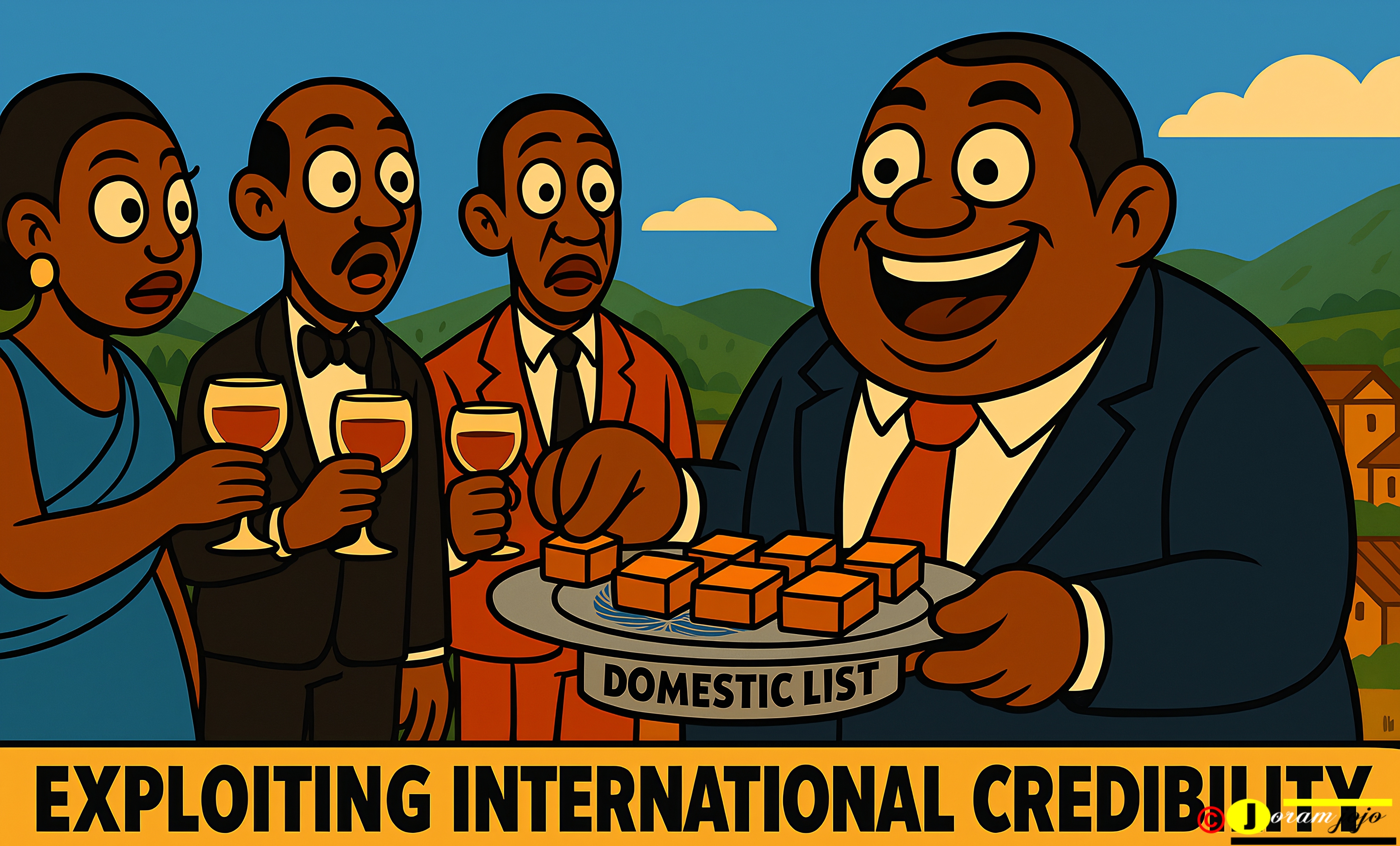
 Ultimately, this pervasive fear is the regime’s confession of its own weakness. A government that is truly confident in its support, that truly delivers justice and prosperity, has no need to rule through dread. Its need to chill the very air that people breathe, to make silence the only safe option, reveals a power structure that is fundamentally illegitimate and deeply insecure. It rules not because it is loved, but because it has made the cost of defiance unthinkably high. The greatest testament to this fear is not the list itself, but the immense, crushing silence that follows its publication—a silence that speaks volumes about the true nature of the power that demands it.
The Fortress Built on Fear: A Regime Barricading Itself from Its Own People
Beneath the sterile lexicon of ‘compliance’, ‘sanctions’, and ‘risk assessment’ beats the ancient, fearful heart of every unaccountable power: the terror of its own people. This ‘Domestic List’ is not the instrument of a confident state, but the weapon of a ruling class that has systematically gutted every independent pillar of society—the courts, the press, the unions, the universities—transforming them into hollowed-out facades that echo only the official line. It is the ultimate tool of a clique projecting an image of unshakeable strength to the world, while its foundations tremble with a paranoia that can only be quieted by silencing every whisper of dissent.
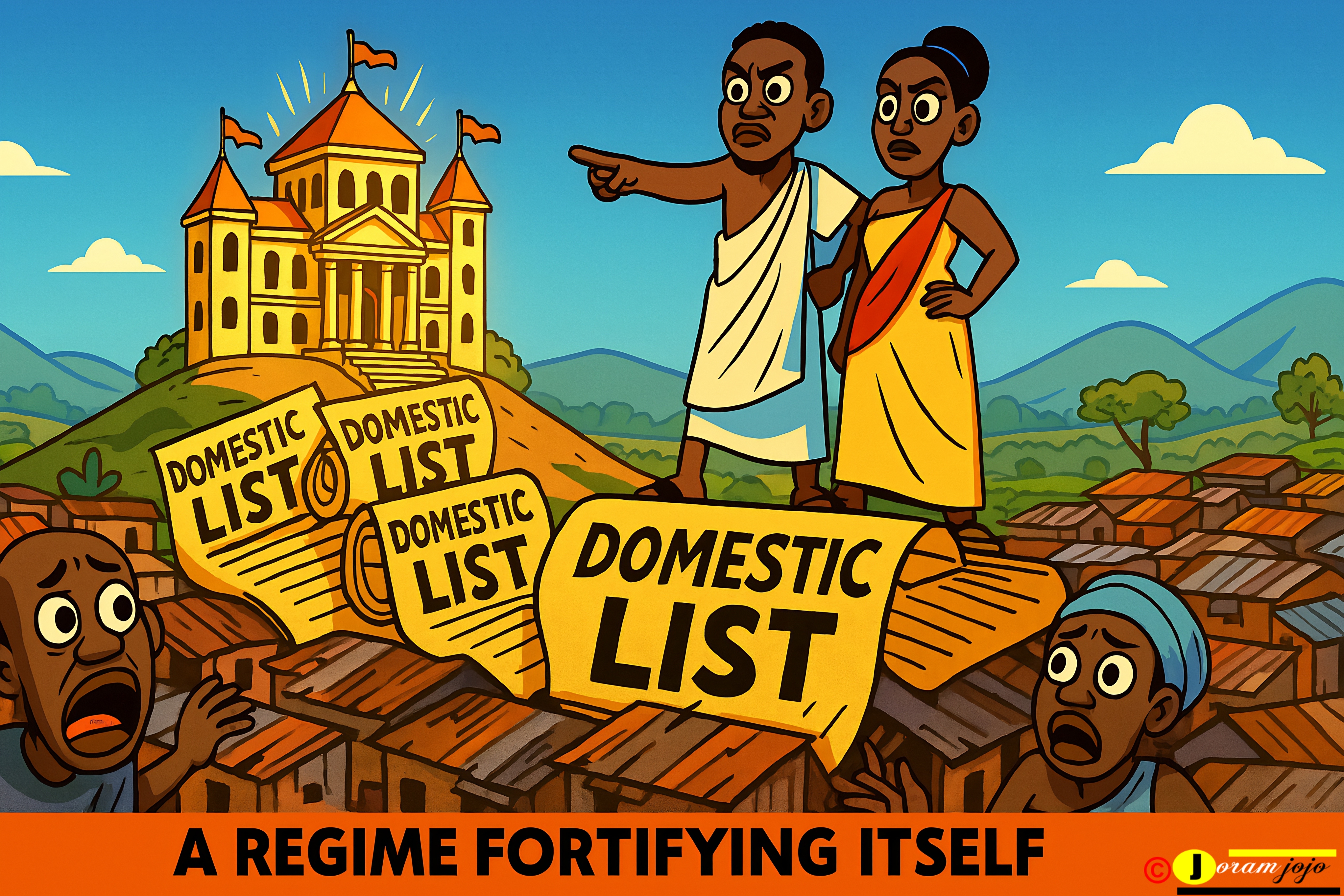 This list is the sound of the palace doors being barred. It is not a shield for the populace, but a bulwark against them. The regime, having monopolised politics and commerce, now seeks to monopolise morality itself, declaring all opposition a form of terrorism. Yet this very act of overreach reveals a profound and telling weakness. A power that is truly secure in the consent of its people does not need to criminalise the entirety of its opposition. It does not need to terrify its diaspora into silence or turn family members into potential informants. This is not the behaviour of strength; it is the frantic activity of a regime building ever-higher walls, knowing that the threat it fears most comes not from beyond its borders, but from within the hearts of those it rules.
The greatest robbery is never the one committed in a shadowy back alley. The most devastating theft is the one conducted in broad daylight, legitimised by official stamps and ministerial decrees. The true ‘terror financiers’ are not merely those moving modest sums for political causes. All too often, they are the men in tailored suits sitting in presidential palaces, the architects of a system that siphons billions from public coffers and international aid. They use the language of security and stability to commit the most comprehensive crime imaginable: the theft of a people’s future. They plunder the funds for schools and hospitals to build their own fortunes, and they steal the very freedom to speak, to assemble, and to imagine a different destiny, all while pointing to their list of designated villains.
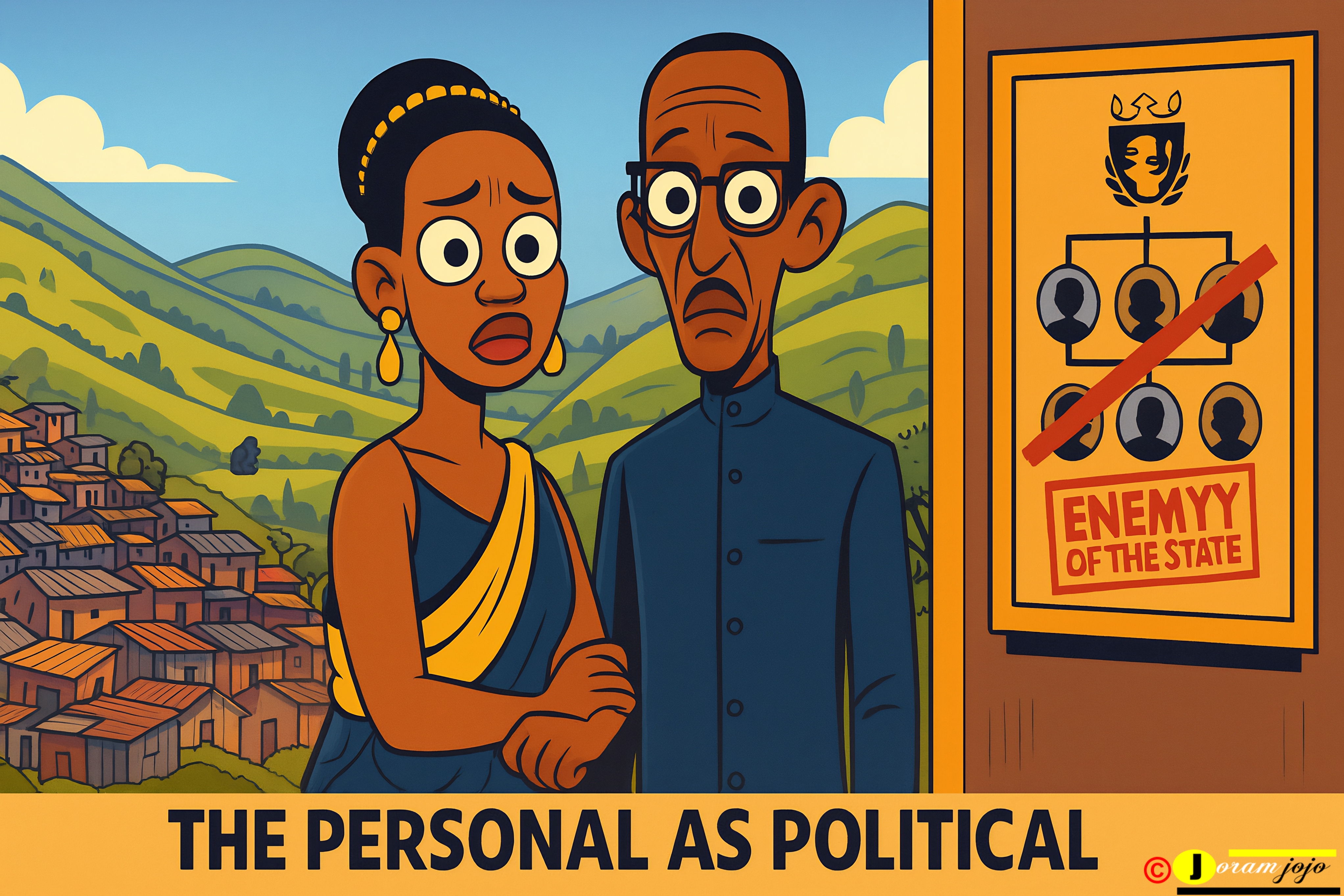 There is an adage that captures this desperate, defensive aggression: “The tallest fences are built by those with the most to hide, and the most to fear.” The regime’s ‘Domestic List’ is the highest fence of all—a digital and financial barricade designed not to keep dangers out, but to keep a restless population in a state of managed fear and submission. It is a fence built to conceal the grand larceny of a nation’s wealth and the imprisonment of its political spirit.
This document, therefore, is not a protective measure for the common good. It is a shield for the powerful, a desperate attempt to deflect scrutiny from the corrosive corruption and the brutal repression that are the true engines of their rule. To see it as anything else is to be deceived by the magician’s flourish. We must see it for what it is: the final, frantic fortification of a regime that knows, in its bones, that its greatest enemy is not a named terrorist on a list, but the simple, unyielding desire of ordinary people for a voice, for justice, and for a future that belongs to them, not to the palace and its cronies. A fortress may look imposing, but it is always a confession of fear—and every fortress, in the end, can be surrounded by the very people it was built to contain.
The Harvest of Fear: A Nation Held Hostage by Its Own Protectors
A country’s true wealth is measured in the health of its people, the fertility of its land, and the creative freedom of its communities. When a state’s most prolific export shifts from the fruits of the earth to an endless, meticulously curated list of enemies, it is not demonstrating strength—it is advertising a profound and terminal crisis. This pivot from cultivating coffee and tea to cultivating fear reveals a harvest of a different, more sinister kind. It forces a simple, brutal question upon us: in this endless, shadowy war that requires no battlefields but the human heart, who truly reaps the rewards?
 The answer is not found in the prosperity of the ordinary Rwandan. For the teacher, the farmer, the market trader, this war offers only a bitter choice: live in fear of the unseen ‘terrorist’ spectre promoted by the state, or live in fear of the state itself for questioning that spectre’s existence. It is a war that devours the national budget, diverting funds from hospitals and schools into the bottomless pit of ‘security’. It is a war that poisons community, turning neighbour against neighbour and making family ties a potential crime. For the common person, this conflict yields only thorns—a life of constrained horizons and silent despair.
The bounty, the rich harvest of this fear, is gathered elsewhere. It is reaped by the small, privileged clique for whom perpetual conflict is the ultimate business model. Their power is secured not by delivering justice or prosperity, but by the constant identification of new monsters to slay. Their wealth is guaranteed by contracts and budgets that flow from a nation permanently on a ‘war footing’. Their impunity is assured by a narrative that frames any challenge to their rule as an act of treason against the nation itself. They are the chief beneficiaries of the chaos they so artfully organise.
There is an adage that speaks to this self-devouring logic: “A kingdom divided against itself cannot stand.” A nation driven to see an enemy in every shadow, a traitor in every critical thought, and a terrorist in every dissenting voice, is a nation engineering its own paralysis. This is not unity; it is a coerced silence that masks a deep, festering division between the rulers and the ruled. The state, in its desperation to control everything, becomes the very source of the division it claims to fight.
 The damning indictment, then, is not merely about a list or a policy. It is about the fundamental nature of power. Real power does not lie with the people who grow the food, build the homes, and teach the children. The power lies with those who have mastered the art of manufacturing fear and selling themselves as the only possible solution. They are not terrorised by external foes; they are the source of the terror that keeps their own people in check. The ultimate revelation of these documents is that the most potent instrument of terror is not a bomb or a bullet, but a bureaucrat’s stamp on a piece of paper that can erase a person’s life, liberty, and legacy. And until that power is returned to the hands of the many, the harvest will always be one of fear, and the nation will remain a hostage in its own land.
Sub delegate
Joram Jojo

- Paul Kagame’s Rwanda Seeks £50m from UK in Deportation Dispute - January 28, 2026
- Paul Kagame’s Aggression: A Comprehensive Look at Rwanda’s War in the Congo - December 21, 2025
- Decoding the Washington Accords and the Fight for the Congo’s Future - December 5, 2025
RELATED PUBLICATIONS:
 Paul Kagame’s Rwanda: How a Dictatorship Masquerades as Success
 Rwanda’s Budget Exposed: Fiscal Mirage or Economic Reality?
 Paul Kagame’s Rwanda: The Dark Truth Behind Africa’s ‘Economic Miracle
 NOBLE MARARA AKORERA COLONEL DAN MUNYUZA
 CORONAVIRUS COVID-19 CASES IN RWANDA KEEP RISING EVERYDAY
 THE DR CONGO HAS NO TRIBE CALLED BANYARWANDA
 Paul Kagame kills with Impunity and Rewarded for it
 Paul Kagame is the Real Genocidal Maniac of Rwanda
 General Kayumba Nyamwasa and Rwanda National Congress are very Dangerous
 RICHARD GISAGARA TURNS FRANCE INTO A GULAG FOR JOURNALISTS
 Rwandan rebels of RUD-Urunana Kill Civilians in DRC
 RWANDAN SHOT DEAD AND TWO OTHERS INJURED
 RWANDA SECURITY SERVICES HAVE ARRESTED YVONNE IDAMANGE IRYAMUGWIZA
 UK AND RWANDA STABS ORPHANS OF THE GENOCIDE IN THE BACK
 THE RWANDA THEY NEVER SHOW THE WORLD, PART1
 THE RWANDA THEY NEVER SHOW THE WORLD, PART2
 Will Sanctions Work? Examining the EU’s Approach to Rwanda Amid Regional Instability
 Accountability for Rwanda: M23 Terrorists Atrocities Violate AGOA & International Law
 Rwanda’s GDP Growth Exposed: The Truth Behind Kagame’s Economic Mirage
 Rwanda’s WASH Scandal: Governance Failure, Corruption & the Serena Hotel Smokescreen
 Paul Kagame’s Rwanda Seeks £50m from UK in Deportation Dispute
 The Rwanda Opposition in Diaspora is a Disgrace
 GUSHYINGURA IGIKOMANGOMA FILIPO, UKO BYAGENZE
 Rwanda’s Complicity in Eastern DRC: A Trail of Exploitation and Suffering